26 November 2026
Cymbal Demo Policies and Preorder Timelines Explained
Cymbal Demo Policies and Preorder Timelines Explained
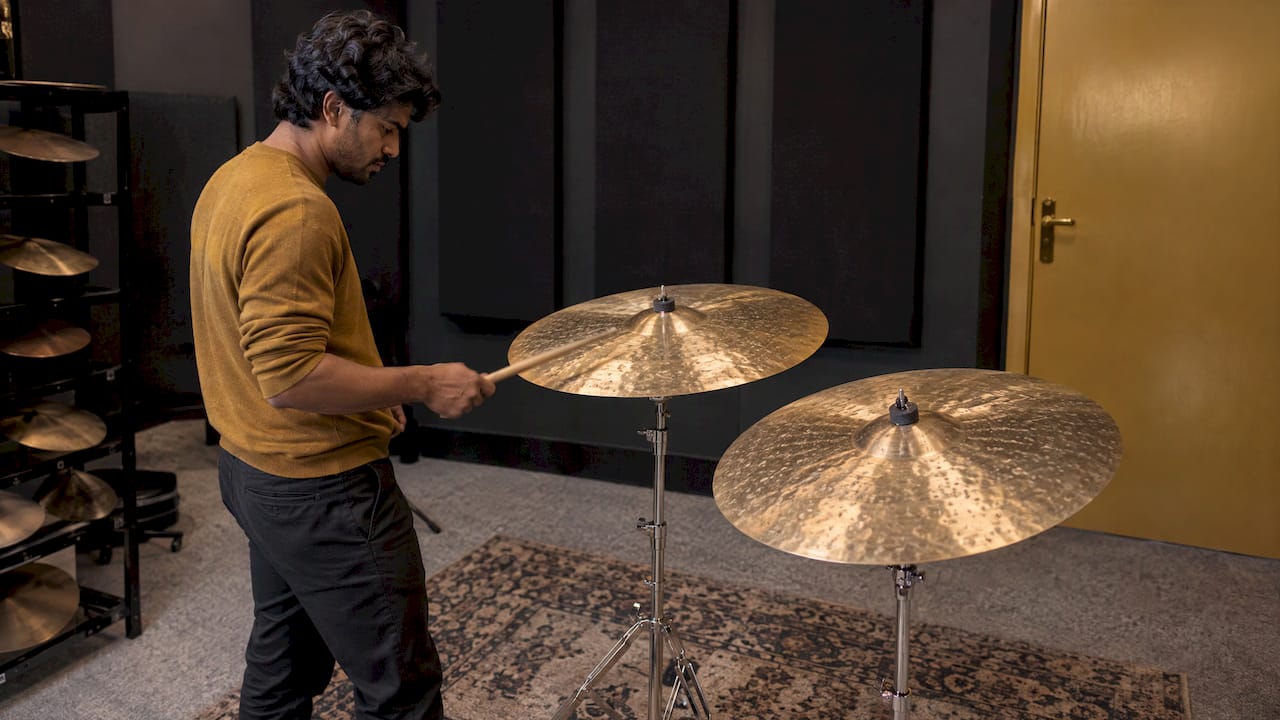
A cymbal demo policy is the set of rules for how you can hear a cymbal before you own it: in a room, on a recording, or at home. A preorder timeline is the estimate of when a cymbal you have paid for will reach you. Cymbals are sold by sound, not by spec sheet, so both matter more here than for almost any other piece of drum gear. The drummer who reads both before paying is the one who ends up with the cymbal they actually wanted. At Temple of Sound we distribute Alchemist Cymbals and London Drumstick Co. sticks in the UK, so this is how we would walk a friend through it.
TL;DR
- A demo policy answers three things: where you can hear the cymbal, whether it is the exact cymbal you will receive, and what happens if you keep or return it.
- Two cymbals with the same name and weight can sound different, especially when hand-hammered, so the exact piece matters more than the model.
- A preorder date is an estimate from the maker or distributor, not a promise. Plan around the later end of it.
- Get demo, deposit, cancellation and delay terms in writing before you pay, and never plan a preorder around a gig, birthday or holiday.
- Hearing a cymbal on video is useful for narrowing the field, but a room, a stick and your own hands decide the purchase.
Table of Contents
- What a cymbal demo policy actually covers
- How to listen in a demo, so the policy is worth using
- Conditions and responsibilities that usually come with trying cymbals
- Preorder timelines: what the date really means
- A checklist for checking terms before you commit
- When you can’t audition in person
- Where to start with Temple of Sound
- Our perspective
- FAQ
- Sources
What a cymbal demo policy actually covers
Most drummers hear “demo” and think of a shop with a wall of cymbals and a kit in the corner. That is one version. In practice a demo policy can describe several different arrangements, and each has its own rules:
- In-person audition. You play cymbals in a shop, showroom or at a trade event. The rules are usually about who can open boxes, which sticks you may use and whether you need to book.
- Recorded demo. A video or audio clip made by the seller or an artist. There is no policy to speak of beyond what the clip shows, but it tells you the room, microphones and stick used.
- Matched-piece sound clips. Some sellers record the individual cymbal that will ship. This is the closest thing to an audition at a distance.
- Home trial or return window. You buy, play at home and send it back within a stated period. This is a returns policy wearing a demo’s clothes, and the conditions (condition of the cymbal, who pays shipping, restocking fees) are everything.
When you read a policy, sort each sentence into one of those four buckets. That tells you quickly what you are really being offered.
Why the exact cymbal matters
Hand-hammered cymbals are shaped by hand, so two with the same name and weight can differ in pitch, spread and stick definition. If you want to know what to listen for before you worry about policy, our guide to hearing cymbal profiles and reading hammering clues walks through it. The policy question that follows is simple: is the cymbal I am hearing the cymbal I will receive? If the answer is no, treat any demo as a guide to the model’s character, not a guarantee of the piece.
How to listen in a demo, so the policy is worth using
A policy is only as useful as your audition. A few habits make a short session count.
- Bring your own sticks. The stick changes everything: bead size, taper and weight shift attack and wash. Judge a cymbal with the sticks you play every week.
- Play at your normal dynamics. Many cymbals sound pleasant at a whisper and harsh at a backbeat, or the reverse. Play the way you play on the gig.
- Hear it on a stand, not in your hand. Hung properly, a cymbal sustains and decays differently. Mounting also reveals whether it wobbles or chokes.
- Compare in pairs. Two similar rides or crashes, back to back, teach more than ten played one at a time with a minute between.
- Step back. Ask someone to play while you listen from the front. Stage sound is not the sound the audience gets.
- Listen for the tail. A wash that blooms after a crash can swamp a small room or a recording. Our note on cymbal resonance control covers taming it once you own the cymbal.
If you are choosing something specialized, such as a trash crash or a china, the audition has a different job. Auditioning trash crashes and chinas is mostly about whether the cymbal’s trashiness fits the music you play. The same goes for splashes and stacks, where a quick test of attack, decay and stackability tells you most of what you need. We lay that out in our 30-second effects cymbal test.
Conditions and responsibilities that usually come with trying cymbals
Even the friendliest demo arrangement comes with conditions. Knowing the common ones saves awkward surprises.
- Condition on return. Almost any return or trial scheme expects the cymbal to come back clean and undamaged, in its packaging. Cymbals are metal but not indestructible: a bad strike, a bad stand or rough packing can leave edge dings. If you want to understand what counts as damage and what is normal play, read our explainer on cymbal edge dings.
- Handling at an audition. Expect to be asked to use sticks, not hard mallets or tools, and to keep fingerprints off the surface where you can. Oils from skin leave marks. Our guide to cymbal care and cleaning explains why.
- Shipping. Shipping a cymbal for a home trial often has a cost, and it is often yours on the way back. Ask who pays each leg and who is responsible while it is in transit.
- Deposits and holds. Sellers sometimes hold a cymbal for you for a short window. Ask how long, whether it needs a deposit and whether that deposit comes back.
- Duties and taxes. If you are buying across borders, ask about import charges before you buy a cymbal you intend to send back, since they can be hard to recover.
Preorder timelines: what the date really means
A preorder usually means the cymbal is not yet in the seller’s hands. Maybe a batch is still being made, or a shipment has not landed. The date you see is an estimate, and understanding where it comes from helps you read it.
One published preorder policy from a European retailer is a good illustration of how the date is produced. It says the availability date comes from the manufacturer or distributor, is refreshed monthly, and represents the date the manufacturer expects to deliver the last units. In other words, a date in a preorder listing is only as firm as the supplier’s production plan.
Another retailer describes a different model: items are marked as preorder, the expected dispatch date is the official release date, stock is reserved with suppliers right away, and customers are emailed about delays or shortages. The common thread is that the seller is relaying someone else’s schedule.
For handmade cymbals, think of it in three layers:
- Production. Hand-hammered cymbals are made in small batches, so the schedule depends on the maker’s workload, not a factory line.
- Transit. Once made, they ship to a distributor, then to a seller or direct to you. Each hop can add days.
- Handling. Checking, packing and dispatching takes time at the end.
Reading “estimated” correctly
- “Expected” or “estimated” means a target, not a commitment.
- A single date usually means the earliest realistic one. Add margin.
- A range (for example, a number of weeks) is more honest. Plan around the far end.
- “Made to order” means the clock starts when you order, not before. Ask what the standard lead time is and whether it is counted in working days.
The policy cited above goes further and warns that delays of many months are common in its sector, advising customers not to order preorder products for a specific occasion. That is sound advice for a drummer too. If you need a cymbal for a recording session next month or a tour, buy one that is in stock and ready to ship.
What to expect when a preorder changes
Preorders can be delayed, changed or become unavailable. A fair policy tells you in advance what happens in each case. Look for:
- How you will be notified, and how soon.
- Whether you can cancel, and whether a deposit is refunded.
- What happens if the delay passes a stated limit. Some policies give a full refund once a delay exceeds a set period; the retailer above, for instance, offers a penalty-free refund when delivery runs more than six months late.
- Whether you can swap to a similar cymbal if yours is cancelled or discontinued.
The same policy states that deposits are non-refundable on cancellation and that full-payment cancellations are refunded less a 15% non-refundable deposit. Those are one shop’s terms, not a rule of the trade, but they show why you should read the cancellation clause before you click pay, not after a delay.
A checklist for checking terms before you commit
Spend five minutes with the product page and the policy pages and answer these. If a point is not written down, ask by email and keep the reply.
| Question | Why it matters |
|---|---|
| Is the cymbal I hear the cymbal I receive? | Handmade cymbals vary piece to piece. |
| Can I audition in person, and do I need to book? | Saves a wasted trip. |
| Is there a return window, and who pays shipping? | Return costs can erase the value of a trial. |
| What condition must it be in to be returned? | Strike marks and dings can void a return. |
| Is the preorder date an estimate or a commitment? | Sets how much margin you add. |
| Is a deposit taken, and is it refundable? | Determines what you lose if you cancel. |
| What happens if the date slips? | Sets your right to cancel or swap. |
| Are duties or taxes included? | Matters for cross-border buyers. |
If you are a shop or retailer reading this, the same table works in reverse. Clear answers to each row cut returns and complaints. We cover the shop floor side in our guide to cymbal layout, signage and demos, and the trade side in our wholesale checklist for retailers.
When you can’t audition in person
Many drummers, especially outside big cities, will never stand in a room with a particular cymbal before buying. That is normal, and it is why the decision comes down to narrowing smartly.
- Watch demos on decent speakers or headphones, and note the stick and room. A bright, dry room flatters one cymbal and punishes another.
- Pick two or three finalists by character (dark and dry, bright and washy, in between), then decide on the weight and size you use.
- Use a clear, written description of the sound of each cymbal, not just its weight.
- Read our artisan cymbal buying guide to match sound to playing style, so a clip tells you something.
A recorded demo cannot capture how a cymbal feels under the stick or how it sits in your room. Use it to shortlist, not to settle.
Where to start with Temple of Sound

If you are browsing handcrafted B20 cymbals, the Alchemist Collection is where we start, with the wider hand-hammered cymbal range alongside it. Our made-to-order approach is part of what we offer, and the product pages are where you should look for the details of the piece you are considering. Sticks are on the London Drumstick Company page, including custom drumsticks if you want to audition cymbals with a stick built around your hands.
We also run membership tiers on our home page: Free Member, Pro Member at £4.99 per month, and VIP Member at £9.99 per month, for drummers who want discounts and benefits on what they buy.

Retailers can open a trade account with us to stock these ranges. The wholesale checklist linked above shows what is involved.
Our perspective
Cymbals are the most personal thing on a kit. A snare can be swapped by tuning, but a cymbal is one voice, and you live with it. That is why we think demo policies and preorder timelines deserve more attention than they usually get.
We build our offer around handcrafted, made-to-order cymbals and sticks, with the Alchemist range and London Drumstick Co. at its center. A handcrafted piece is a particular piece, so the best thing a buyer can do is decide on character first, then size and weight, and read the product page closely.
Our advice to drummers is simple. Know what you want the cymbal to do in your playing, listen with your own sticks, and treat any date as an estimate and plan with margin. Our advice to shops is the mirror image: tell customers plainly what they are hearing and when it will arrive.
Our blog is where we put the detail, from hearing cymbal profiles to cymbal care, and the blog index has the rest.
Will
FAQ
Is a cymbal demo video enough to decide on a purchase?
It is enough to build a shortlist, not to close the deal. A clip shows the cymbal in one room, with one stick and one microphone setup. Use it to compare characters, then confirm the exact piece, weight and size before you commit.
Should I trust the date on a cymbal preorder?
Treat it as a target. Dates on preorder listings are typically relayed from the maker or distributor and can move, so add margin and never rely on a preorder for a gig, recording date or gift occasion. If you need it by a deadline, choose an in-stock cymbal.
What should I ask before paying a deposit on a cymbal?
Ask whether the deposit is refundable, what happens if the date slips, whether you can swap to a similar cymbal and how you will be told about changes. Get the answers in writing so you can refer back to them.
Can I return a cymbal I have tried at home?
That depends entirely on the seller’s returns policy. Read the return window, who pays shipping each way and the condition requirements. Play with sticks only, handle the cymbal by the edges and keep the packaging, so the cymbal comes back in the state it arrived.
Do retailers need different demo terms from players?
Usually yes. Shops care about display, in-store auditions and stock timing, while players care about hearing the exact cymbal and return conditions. Our trade and merchandising guides cover the retailer side.