6 September 2026
Test Effects Cymbals in 30 Seconds and Buy the Right Pair for Drummers

Test Effects Cymbals in 30 Seconds and Buy the Right Pair for Drummers
Effects cymbals are the small, purpose-built pieces (splashes, chinas, stacks, perforated crashes, bells, and plates) that add texture, accents, and short bursts of noise a standard crash or ride can’t produce. Most drummers get more mileage from just two common sizes of effects cymbals: a splash for quick, bright punctuation and a china for aggressive, trashy hits. Buy those first, then expand once you know what your music actually needs.
TL;DR:
- Buy a small splash (8-10 inches) and a 16-18 inch china first, as they cover most effects needs for accents and aggressive hits.
- Choose effects cymbals based on attack clarity, decay length, and how well they sit in the midrange of your mix to avoid masking other instruments.
- Mount effects cymbals with proper hardware, experiment with angles, and match sizes in stacking setups to prevent unwanted rattling or buzzing.
- Use overheads or off-axis miking in recordings, and apply targeted EQ and compression to tame harshness and control transient sharpness.
- Focus on handcrafting quality B20 effects cymbals over multiple lower-quality options, prioritizing size and response when building a versatile effects setup.
Table of Contents
- Why Effects Cymbals Matter in a Kit
- Types of Effects Cymbals: Sound, Size, and Best Use
- How to Choose an Effects Cymbal for Your Style and Budget
- Setting Up and Playing Effects Cymbals Correctly
- Recording and Mixing Effects Cymbals
- Cymbal Care and Mounting Safety
- How Effects Cymbals Evolved
- Notable Brands and Their Signature Effects Cymbals
- Where Effects Cymbals Fit Best Musically
- Describing Effects Cymbal Tone and Sustain
- What Temple of Sound Recommends After Years in Cymbal Distribution
- Buy or Demo Your Next Effects Cymbal With Temple of Sound
- Sources
Why Effects Cymbals Matter in a Kit
A crash sustains. A ride keeps time. A hi-hat chatters. Effects cymbals do none of that reliably, and that’s the point. They exist to interrupt the groove for a second, mark a transition, or throw in a texture that doesn’t belong anywhere else in the kit. Think of them as punctuation marks rather than sentences.
What gives an FX cymbal its personality comes down to a handful of physical variables working together. Alloy composition changes overtone density. Weight changes how fast the cymbal opens up and how long it rings. Lathing (or the lack of it) changes brightness and complexity, and anything added after manufacturing, like rivets or drilled holes, changes decay and adds buzz or rattle. A splash and a china behave completely differently even at the same diameter because their profiles and edge treatments send the sound wave through the metal in different directions.
When you’re evaluating any FX cymbal, whether in a shop or already on your kit, listen for three things:
- Attack clarity: does the initial hit cut through immediately, or does it take a beat to open up?
- Decay length: does the sound vanish in under a second, or does it linger and bleed into the next few bars?
- Midrange masking: does the cymbal’s overtone spread crowd out your snare or guitar frequencies, or does it sit above and below them cleanly?
A cymbal that fails on midrange masking will fight your mix constantly, live or recorded, no matter how good it sounds solo.
Types of Effects Cymbals: Sound, Size, and Best Use
Not every FX cymbal does the same job, and confusing one for another is the fastest way to end up with a drawer full of pieces you never touch. Here’s how the main categories break down.
1. Splash Cymbals
Splashes run from 6 inches to 14 inches, with most working drummers settling somewhere between 8 and 10 inches. They deliver a fast attack and a decay so short it’s almost percussive rather than musical. Use a splash to punctuate a fill, accent a single beat, or add a flash of brightness over a snare hit without disturbing the groove underneath. If you’re buying your first FX piece, this is where to start, and our own splash cymbal size guide breaks down how diameter changes response.
2. China Cymbals
China cymbals (also called pang or swish depending on the build) invert the standard cymbal profile, curling the edge upward instead of down. That upturned lip is what produces the trashy, aggressive attack chinas are known for, and it means where you strike the cymbal changes the sound dramatically. Hit near the edge for maximum wash and aggression. Hit closer to the bell for a tighter, more controlled bark. Most working chinas sit in the 16 to 18 inch range, though smaller 14 inch “china splashes” exist for tighter accents.
3. Stacker Setups
Stacking isn’t a cymbal type so much as a technique: two or more cymbals mounted tight together to choke each other’s sustain and produce a short, clipped hit that resembles an electronic clap. The trick is pairing sizes deliberately rather than grabbing whatever’s lying around. A common approach uses a 2:3 or 3:4 diameter ratio between the top and bottom cymbals, which keeps their frequencies from canceling each other out into mush. Pair a splash on top of a china, or a trashy crash under a standard crash, and you get a hit with far more character than either piece alone.
4. Perforated, Ozone, and Trash Crashes
These are the newest members of the family. Manufacturers drill or punch holes through the bow of the cymbal, which shortens sustain and injects a gritty, buzzing quality that sits somewhere between a china and a standard crash. Modern trash designs borrow this approach to give players a fast attack with a controlled, reduced sustain that fits busy arrangements without cluttering the mix. They’re popular in contemporary pop, metal, and production drumming where a cymbal needs to hit hard and then get out of the way immediately.
5. Bells, Cup Chimes, and Crotales
These smaller, thicker pieces trade wash and trash for pitch. Cup chimes and crotales ring with a defined, almost tuned tone, making them useful for melodic accents, ambient builds, or moments where you want a cymbal hit that feels intentional rather than chaotic. They’re less common in rock and pop kits but show up frequently in film scoring, jazz, and orchestral percussion setups.
6. Crashers, Plates, and Oddities
This is the catch-all category: flat plates, jingle-rigged crashers, and novelty pieces built for one specific noise. They can be genuinely musical in the right context (a plate cymbal adding a metallic shimmer under a bridge, for example) or purely gimmicky if you buy one because it looked cool in a demo video and never find a use for it. Treat these as later purchases once you know exactly what gap you’re filling.
How to Choose an Effects Cymbal for Your Style and Budget
Start with the role, not the cymbal. Ask yourself whether you need a quick accent, a sustained texture, or a short, percussive punctuation, because that answer narrows your options faster than browsing by brand or price.
Size and weight determine how the cymbal behaves under your stick. Lighter cymbals respond faster and speak at lower volume, which suits small rooms, recording sessions, or quieter genres. Heavier cymbals need more force to open up but project further and hold up better under aggressive playing. If you gig in loud rooms, a thin splash will disappear in the mix; a slightly heavier one will cut through.
Alloy and finish matter more than most beginners assume:
- B20 bronze (80% copper, 20% tin) tends to produce a richer, more complex overtone structure, which is why most professional-grade cymbals use it.
- B8 bronze (92% copper, 8% tin) is simpler and brighter, often found on budget lines, and can sound thinner under close mics.
- Lathed finishes smooth the surface and calm the overtones, producing a cleaner, more controlled sound.
- Raw or unlathed finishes leave more texture on the metal, producing a rawer, trashier voice that many china and effects players prefer.
Durability deserves real attention, especially with chinas and thin splashes played hard on stage. Keyholing (the mounting hole wearing into an oval shape from repeated impact) is one of the most common failure points on FX cymbals, so check your mounting hardware regularly and never overtighten a wing nut.
Before buying anything, play it the way you actually will onstage: hit the edge, hit near the bell, hit it soft and then hard, and listen for whether the cymbal opens up quickly or needs real force to speak. A shop test tells you more in thirty seconds than any spec sheet.
Pro Tip: Bring a pair of your usual sticks to any test session. A cymbal that sounds glorious under a shop’s house mallets can behave completely differently under the 5A sticks you actually gig with.
Resist buying a novelty piece just because it sounded interesting in isolation. As buyers’ guides consistently point out, effects cymbals are fun to demo but often go unused unless they solve a specific musical problem you already have.
Setting Up and Playing Effects Cymbals Correctly
Mounting matters more with FX cymbals than with a standard crash, because slight angle changes shift attack and choke response noticeably.
- Set the height and angle first. Most splashes and chinas sit slightly lower and more angled than a crash, positioned for quick wrist access rather than a full swing.
- Use proper felts and sleeves. A cymbal seated directly on metal will crack at the bell within weeks; a nylon sleeve and felt on each side is non-negotiable.
- Decide upright or inverted mounting for your china. Mounted upright (bell up, standard orientation), a china gives a slightly more controlled trash. Flipped upside down, it opens into a wilder, more explosive wash, a setup favored by players chasing maximum aggression.
- Match your strike zone to the tone you want. Edge hits maximize wash and volume. Bow hits tighten the sound. Bell hits (where the cymbal has one) give a sharp, cutting ping useful for tight accents.
- Build your stack deliberately. Choose complementary sizes using a 2:3 or 3:4 ratio, sandwich them with a proper stacking bolt or wing nut rated for the extra weight, and test for rattle before you play a full set.
Dynamic control separates a musical FX player from someone just hitting things harder. Practice swelling into a china with increasing stick velocity rather than always striking at full force, and experiment with mallets or brushes for gentler textures that a stick simply can’t produce.
Pro Tip: If your stack rattles or buzzes unpredictably, the fix usually isn’t tighter hardware. It’s mismatched cymbal weights letting one piece vibrate freely against the other. Swap one cymbal before you crank down the wing nut further.
Recording and Mixing Effects Cymbals
FX cymbals are unforgiving in a mix because their overtone spread is wide and their transients are sharp. Overheads capture their natural character best, but a close mic angled slightly off-axis gives you more control when a china or stack needs to sit forward in a dense arrangement.
A few habits keep them from fighting the rest of the track:
- Roll off harsh upper mids with a narrow EQ cut rather than a broad shelf, which tames trashiness without dulling the cymbal entirely.
- Use gentle compression to control the initial transient on splashes; save aggressive gating for stacked hits where you want an artificially tight, clipped decay.
- Reverse cymbal swells (recording a crash or china, reversing the waveform, and building it back into the mix) remain one of the most effective ways to create rising tension into a chorus or drop.
- Short slap-delay or a small reverb tail on a splash accent can widen it in the stereo field without smearing the transient.
Effects cymbals sit in the unusual middle ground between pure percussive attack and sustained tonal resonance, which is exactly why they need more deliberate EQ and dynamics decisions than a straightforward crash.
Cymbal Care and Mounting Safety
FX cymbals take more direct, repeated impact in tight spots than a standard crash, which speeds up wear if you’re careless.
- Check felts and sleeves regularly. Bare metal against a stand causes keyholing and cracks over time.
- Clean with a soft cloth and a cymbal-specific cleaner; avoid abrasive pads on lathed or raw finishes, which can strip the surface texture that gives the cymbal its voice, and see our cymbal care and cleaning guide for a full routine.
- Transport in padded cases with dividers between cymbals to prevent edge-to-edge contact.
- A hairline crack near the bell can sometimes be tolerated if it doesn’t spread, but a crack reaching the edge means retirement, not repair.
How Effects Cymbals Evolved
Effects cymbals didn’t start as a category. They started as modifications. Drummers in jazz and big band eras drilled rivets into standard crashes to create sizzle, chasing a sustained shimmer that a plain cymbal couldn’t produce on its own. That instinct, take an existing cymbal and alter it physically, became the foundation for everything that followed.
Chinas arrived from a different lineage entirely, rooted in cymbals used in traditional gong and percussion traditions before being adapted into Western drum kits for their aggressive, unconventional attack. Splashes emerged later as manufacturers realized drummers wanted something smaller and faster than a crash for quick accents, particularly as recorded music demanded tighter, punchier percussion sounds.
The modern perforated and stacked designs represent the latest phase of that same experimental impulse, just executed with manufacturing precision instead of a hand drill. What used to require a drummer physically altering a cymbal at home can now be bought off the shelf, engineered from the start to produce that shortened, trashy decay. The category has moved from accident and improvisation to deliberate design, but the underlying goal, more color, more texture, more punctuation, hasn’t changed at all.
Notable Brands and Their Signature Effects Cymbals
Every major cymbal manufacturer has built at least one FX line around a signature sound, and the differences between them usually trace back to alloy choice and finish rather than marketing.
Handcrafted B20 cymbals, the kind Temple of Sound distributes in the UK through Alchemist Cymbals, lean on traditional hammering and lathing techniques to produce complex, layered overtones that mass-produced B8 alternatives can’t replicate. That complexity matters most on FX pieces, where a splash or china’s entire personality lives in its overtone spread rather than a clean fundamental pitch.
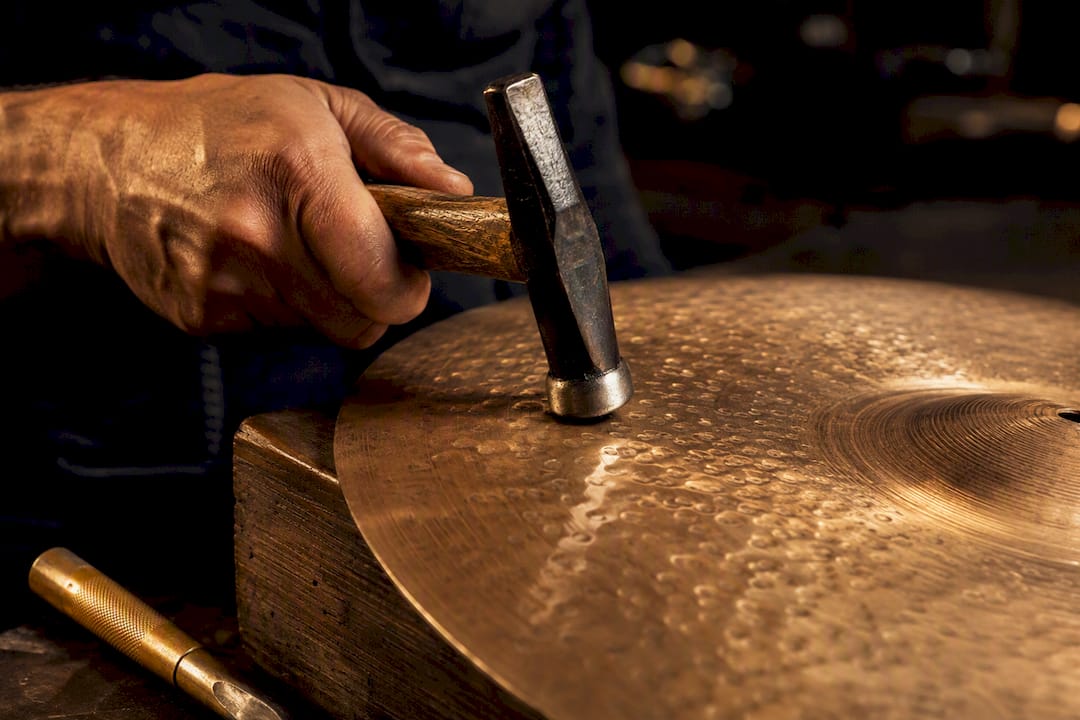
Larger international manufacturers have carved out their own signature approaches too, from heavily hammered, dark trash crashes aimed at metal and alternative drummers to bright, thin splashes designed for pop and session work. The common thread across every serious brand is that FX cymbals get more hand-finishing attention per unit than a standard crash, because inconsistency in an effects piece is far more audible than inconsistency in a ride.
Where Effects Cymbals Fit Best Musically
Genre shapes which FX cymbal earns a permanent spot on your kit. Metal and hardcore drummers lean hard on chinas for their raw aggression, often stacking them for even more chaos during breakdowns. Pop and session drummers favor splashes and perforated crashes because they punctuate without overwhelming a vocal-forward mix.
Jazz and fusion players tend toward subtler tools: cup chimes, small splashes, and occasionally a lightly riveted crash for sustained shimmer under a solo. Electronic and hip hop influenced drumming has pushed stacker techniques into the mainstream, since a tight, clipped stack hit mimics the punchy claps and snaps common in programmed beats.
Worship and contemporary church drumming, a genre that leans heavily on dynamics and space, has also become a major market for splashes and light trash crashes, since those pieces let a drummer add color during quiet verses without overpowering vocals or acoustic instruments.
Describing Effects Cymbal Tone and Sustain
Talking about FX cymbal sound accurately takes a slightly different vocabulary than describing a crash or ride. “Trashy” describes a cymbal with dense, dissonant overtones and reduced clarity, the hallmark of a china or perforated crash. “Bright” and “dark” describe where the overtones sit in the frequency spectrum, with brighter cymbals cutting through a mix more easily and darker ones blending underneath other instruments.
“Decay” and “sustain” get used almost interchangeably by beginners, but they mean different things. Decay describes how quickly the volume drops after the initial hit. Sustain describes how long the sound remains audible before disappearing entirely. A splash has fast decay and short sustain. A well-hammered china can have a slower decay curve but still feel “short” overall because the sound thins out into noise rather than a clean ring.
“Wash” describes a cymbal whose overtones blur together into a continuous, textured sound rather than distinct pitches, common on larger chinas and heavily lathed crashes. Learning to use this vocabulary precisely helps you communicate with other musicians, sound engineers, and, frankly, yourself when you’re trying to remember why you liked one splash over another six months later.
What Temple of Sound Recommends After Years in Cymbal Distribution
I’ve spent enough time around handcrafted B20 pieces to know most drummers overbuy variety and underbuy quality. Two well-chosen effects cymbals beat six mediocre ones every time.
My starting recommendation stays simple: an 8" to 10" splash and a 16" to 18" china. That pair covers the two common FX needs, quick bright accents and aggressive trashy punctuation, without duplicating what your crash and ride already do. Everything else (stacks, perforated crashes, bells) is worth adding only once you’ve identified a specific gap those two don’t fill.
Test before you commit. Hit the edge, hit the bow, hit it soft and hard, and trust your ears over a spec sheet.
— Will
Buy or Demo Your Next Effects Cymbal With Temple of Sound
Handcrafted B20 cymbals give you the layered overtones and controlled trash that mass-produced B8 pieces can’t match, and curated cymbal packs are built specifically so you’re not guessing your way through a splash-and-china pairing alone.

Every pack draws on the same distributor relationships we’ve built with Alchemist Cymbals and the London Drumstick Co., so the sticks you pair with a new china or splash are matched to the cymbal’s response rather than an afterthought. If you’re weighing a stacker setup, our guide on choosing the right cymbal pack walks through pairing logic in more depth, and drummers building out custom stage or studio setups often find useful cross-industry ideas in this guide to custom band merchandise as well.
- Browse curated splash, china, and stacker combinations built around proven size and weight pairings, no more guessing at ratios.
Head to Temple of Sound to browse the current cymbal range, request advice on a starter FX pair, or set up a trade account if you’re buying for a shop.
Sources
- What You Need to Know About…Effects Cymbals — Modern Drummer
- Buyers’ guide: effects cymbals — MusicRadar / Rhythm magazine
- Effects cymbal — Wikipedia
- Creative applications of effect cymbals — Arborea Cymbals and Gongs