20 September 2026
Drummers: Build a Press Kit Brands Want to Get Endorsements in 3–6 Months
Drummers: Build a Press Kit Brands Want to Get Endorsements in 3–6 Months
Most drummers qualify for entry-level endorsement support faster than they think, but they lose the deal in the application, not the résumé. If you already play consistently, use gear you’d buy anyway, and can document an audience or professional credits, you meet the baseline drum endorsement requirements most manufacturers publish. The next move is simple: build a tight press kit and email the brand’s artist relations contact while you’re still posting with their gear on camera, not after.
TL;DR:
- Building a credible endorsement application requires months of consistent use of the brand’s gear and documenting your performances online.
- Brands prioritize engagement within niche audiences and real career credentials over follower count or superficial metrics.
- Successful applicants usually establish a track record through touring, recording, or teaching, with no need for viral fame or large social media numbers.
- Red flags for rejection include generic applications, unverifiable credits, pushy outreach, and lack of visible gear use before applying.
- Endorsements mainly offer product access and promotional support, not direct pay, and require professionalism and patience throughout the process.
Table of Contents
- Drum Endorsement Requirements: The Self-Audit Checklist
- How Do Brands Evaluate Endorsement Applicants?
- Will Drums Endorsements Pay You?
- How to Build a Drum Endorsement Press Kit
- What’s the Right Way to Apply and Follow Up?
- Temple of Sound’s Resources for Endorsement Applicants
- Common Reasons Drum Endorsement Applications Get Rejected
- What Do Real Drum Endorsement Wins Look Like?
- What the Conventional Advice Gets Wrong
- Get Application-Ready with Temple of Sound Membership
- Sources
- FAQ
Drum Endorsement Requirements: The Self-Audit Checklist
Before you write a single email, run your own numbers against what brands actually screen for. Manufacturer endorsement forms tend to ask for the same handful of things, and if you can’t answer these plainly, that’s your to-do list, not a rejection.
- Social metrics: platform, follower count, and average engagement rate, not just total followers.
- Performance and recording history: gigs per month, tours, session credits, or teaching load with student numbers.
- Proof of brand use: photos or video of your actual setup, ideally mid-performance, showing the specific gear.
- Press materials: a short bio, high-resolution photos, audio or video links, a full equipment list, and direct contact details.
- Realistic expectations: no myth here survives contact with reality. You don’t need to be famous, and no brand hands out free full kits on day one.
Drummer Cafe’s rundown of common brand criteria echoes the same pattern across manufacturers: touring, recording, teaching, and social reach, weighted differently by brand but rarely skipped entirely.
How Do Brands Evaluate Endorsement Applicants?
Artist relations managers don’t rank applicants by follower count. They rank by influence within a specific audience, and a drummer with 8,000 tightly engaged followers in a metal drumming niche often beats one with 80,000 generic followers who never comments back. Engagement rate and niche authority carry more weight than raw reach.
Career credentials matter next: regional or international touring, recorded credits on released material, a real teaching roster, or a history of clinics. These show a brand that you’re active in the scene, not just posting about it.
Brand fit closes the loop. Companies want artists who already play their gear and whose genre and audience mirror the brand’s own customer base. Drum Helper’s breakdown of endorsement mechanics frames this as building a genuine value proposition rather than asking for free product. Professionalism seals it: a clean application, accurate credits, and a polite, timely follow-up beat a flashier pitch riddled with typos or unrealistic asks.
Will Drums Endorsements Pay You?
Rarely, and not the way most drummers imagine. The typical endorsement is a support relationship: you get product access, discounts, or promotional cooperation in exchange for public use of the gear and some content or word of mouth. MusicRadar’s guide to endorsement realities is blunt about it: paid endorsements are uncommon, and when money does move, it’s usually a separately negotiated event sponsorship covering travel or an appearance fee, not a salary for playing the brand’s cymbals.
Watch the contract language before you sign anything. Overbroad exclusivity clauses that lock you out of other brands for years, or vague deliverables with no defined reporting schedule, are the two most common red flags in these agreements.
How to Build a Drum Endorsement Press Kit
A press kit is where most applications win or lose, and it takes a weekend to build properly. Structure it in this order:
- One-page bio: who you are, your genre, your current gear, and your career arc in three or four sentences.
- Credits list: recent tours, releases, session work, or teaching numbers, bulleted and dated.
- High-resolution photos: live and studio shots, gear visible, at least one close-up on the kit.
- Audio or video links: two to three tracks or clips, hosted, not attached as raw files.
- Equipment list: exact models and sizes you currently play, matched to the brand’s own catalog where possible.
- Social links and metrics: platform, follower count, and engagement rate, presented as a short table rather than a paragraph.
- Contact details: email, and management contact if you have one.
Keep photos under 5MB each in JPEG format, host video on YouTube or Vimeo rather than emailing files, and put everything in a single shared folder with a clear naming convention to boost your digital footprint and reputation. Your outreach email should run short: a one-line introduction, why this specific brand fits your sound, what you bring in numbers and credibility, links to your kit, and a polite close. Resources like Temple of Sound’s application walkthrough go deeper into formatting each piece if you want a template to copy.
Pro Tip: Do the job of an endorsee before you’re one. Tag the brand in your posts, credit their gear in captions, and build three to six months of visible advocacy before you apply. Practitioner guides on the endorsement process treat this lead time as the single biggest lever most applicants skip.
What’s the Right Way to Apply and Follow Up?
Skip the cold DM. Use the channels brands actually built for this.
- Apply through the official form or artist relations email, never a general customer service inbox. Brands like SJC Drums publish dedicated application pages for exactly this reason.
- Wait the advertised response window, then send one polite follow-up. If there’s still silence after that, move on rather than chasing.
- If accepted, report on schedule. Brands expect periodic updates on how you’re using the gear, not silence until you need something.
Endorsements are relationships that reward patience over persistence. A single well-timed follow-up reads as professional; three reminders in a week reads as a warning sign.
Temple of Sound’s Resources for Endorsement Applicants
Temple of Sound is the UK’s exclusive distributor for London Drumstick Co. drumsticks and Alchemist Cymbals, which puts us in regular contact with the same artist relations conversations this article describes. Will’s guides on custom drumstick specs and matching stick weight to your playing cover the technical detail brands want to see in an equipment list. Member accounts also give access to product demos and higher-quality assets worth referencing when you’re building a press kit from scratch.
Common Reasons Drum Endorsement Applications Get Rejected
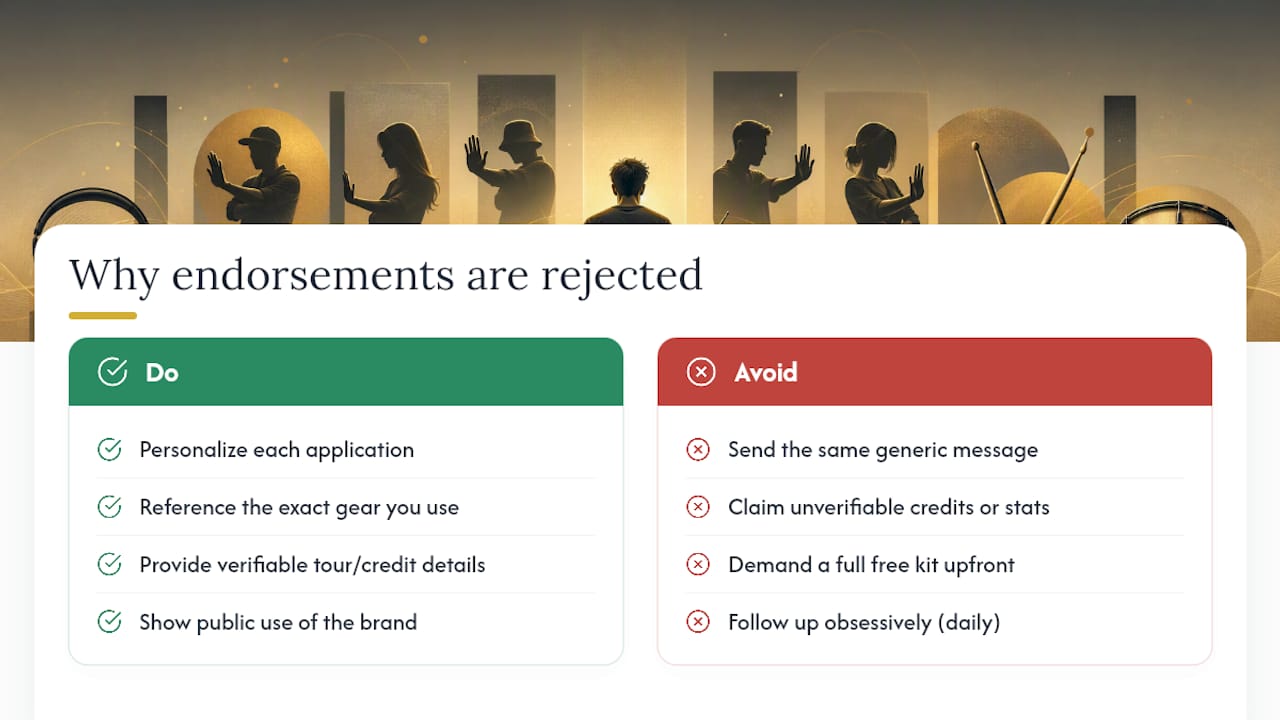
Most rejections come down to mismatch or sloppiness, not talent. A generic application sent to five brands at once, with no reference to the specific gear you use or why that brand fits your sound, signals you’re collecting endorsements rather than building a relationship.
Inflated or unverifiable credits are another fast disqualifier. If your bio claims a tour that isn’t backed by dates, venues, or a promoter’s name, or your follower count doesn’t match your engagement, artist relations teams notice. So does an equipment list that doesn’t match what’s visible in your photos and videos.
Pushy or entitled outreach kills more applications than weak metrics. Asking for a full free kit before you’ve shown any public use of the brand, or following up daily after a single email, reads as a transaction rather than a partnership. MusicRadar’s reporting on endorsement etiquette points to exactly this pattern: brands expect regular feedback and advocacy once you’re on board, and an applicant who can’t manage basic professionalism during outreach won’t manage it after signing.
Finally, timing sinks otherwise solid applicants. Applying with zero visible history using the brand’s gear, then expecting a fast yes, ignores how most brands actually build their rosters. They want to see you as a customer first.
What Do Real Drum Endorsement Wins Look Like?
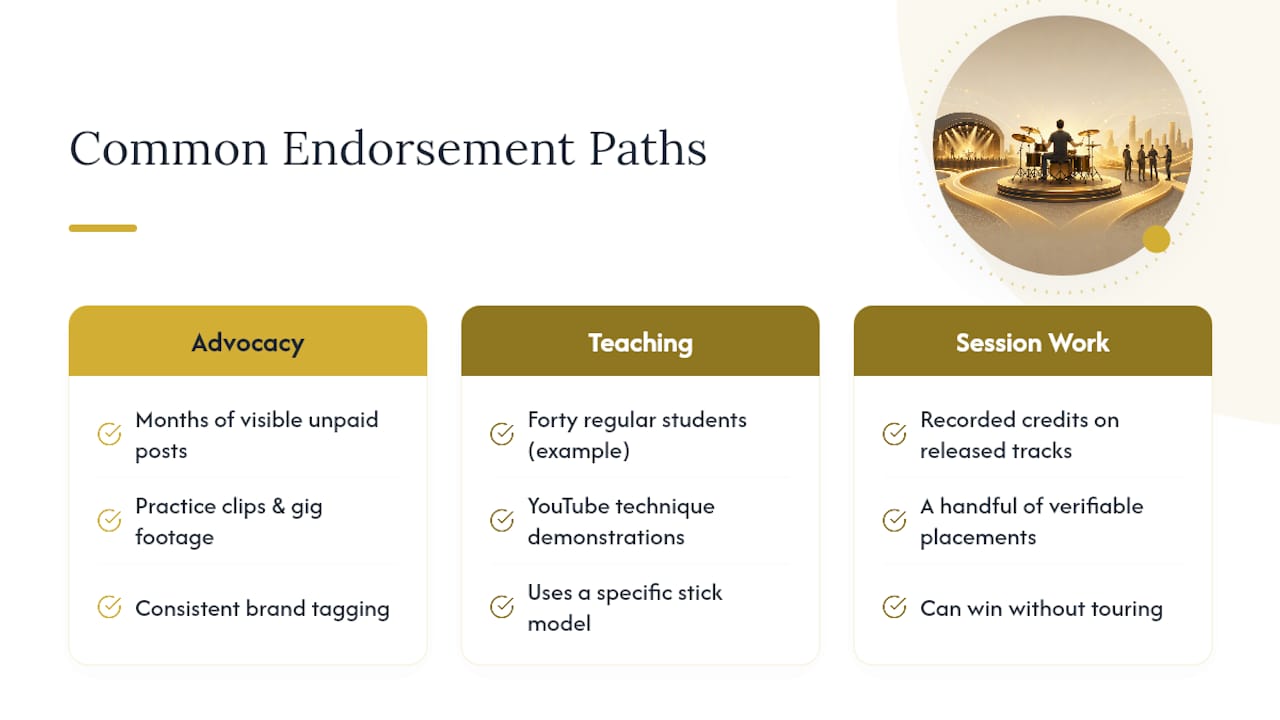
The pattern behind almost every successful application is the same: months of visible, unpaid advocacy before the brand ever enters the picture. A working drummer who spends a season posting practice clips and gig footage on a specific cymbal setup, tagging the brand consistently, builds a case file without trying to.
Teaching credentials open doors that raw performance sometimes can’t. A drum instructor with forty regular students and a YouTube channel demonstrating techniques on a specific stick model presents exactly the kind of steady, credible reach that a teaching-focused endorsement tier rewards, since brands know instructors influence what their students eventually buy.
Session players tend to win endorsements through a different door: recorded credits. A drummer with placements on a handful of released records, even without touring, can point to concrete, verifiable work that a bio claim alone can’t match.
None of these paths involve viral fame. They involve a drummer who used the gear, documented it honestly, and approached the brand once they had something real to show. That’s the throughline across almost every account of how these deals actually happen, from manufacturer forms to practitioner write-ups on the step-by-step process.
What the Conventional Advice Gets Wrong
Most articles on this topic treat endorsement criteria like a scoreboard: hit enough followers, hit enough gigs, and the deal follows. That’s backward. Brands are screening for a working relationship they won’t regret, and the applications that succeed read like a colleague introducing themselves, not a résumé begging for attention.
The most overrated factor is follower count. The most underrated factor is consistency, showing up with the same gear, the same tone, and the same story for months before you ever fill out a form. Brands can tell the difference between a drummer who started using their cymbals last week for the application and one who’s been posting with them since spring.
If you take one thing from this guide, prioritize the visible-use period over the paperwork. Spend three months building a real case with your camera and your gig calendar, then spend one afternoon turning that into a press kit. Skipping the first step and rushing the second is why so many well-qualified drummers get quiet rejections instead of gear.
— Will
Get Application-Ready with Temple of Sound Membership
Temple of Sound gives working drummers something most endorsement guides skip: actual access to the gear you need to build a credible application, without waiting on a brand’s approval first. As the UK’s exclusive distributor for London Drumstick Co. and Alchemist Cymbals, we can get you playing and documenting the exact products artist relations teams recognize.
A Pro Member account at £4.99 a month unlocks member pricing on the gear you’ll be showcasing in your press kit, and VIP Member at £9.99 a month adds deeper discounts if you’re outfitting a full kit for consistent public use. Both sit above the Free Member tier if you just want to browse the Alchemist Collection or the London Drumstick Company range first. Visit the membership page, pick a tier that matches your budget, and start building the visible track record your next application will need.
Sources
- Make money from playing drums: the dos and don’ts of endorsements | MusicRadar
- Endorsement Form | Meinl Percussion
- How to Get Drum Endorsements: The Truth Behind Sponsorships | Drum Helper
- 5 Steps to Getting Endorsed (The Right Way) – MASTERMIND DRUMMER
FAQ
How Do You Get a Drum Endorsement?
Build a visible track record using the brand’s gear for several months, then submit a complete press kit through the manufacturer’s official endorsement form or artist relations email. Brands prioritize applicants who already use their products authentically over cold applicants with no history.
What Is the 80/20 Rule in Drumming?
Definitions vary by source, so treat it as a rough prioritization principle rather than a fixed formula.
Do Drum Endorsements Get Paid?
Rarely. Most endorsements provide product access, discounts, or promotional support rather than a salary, and paid arrangements are uncommon, usually limited to separately negotiated event sponsorships covering travel or appearance fees.
What Is the “Forbidden” Drum Groove?
This refers to a specific viral meme about an overused fill or groove pattern in drumming communities, not an official industry term or endorsement criterion. It has no bearing on endorsement applications and isn’t part of any brand’s evaluation criteria.
What’s the Difference Between an Endorsement and a Sponsorship?
An endorsement is typically an ongoing product-support relationship, while a sponsorship is often event-specific and may include a fee. Temple of Sound’s breakdown of the two terms covers exactly where the line falls and why brands use each differently.