22 August 2026
Endorsement vs Sponsorship for Drummers: What's the Difference?
Endorsement vs Sponsorship for Drummers: What’s the Difference?
An endorsement means you publicly commit to a brand and promote it, usually in exchange for gear discounts, product support, or credibility rather than cash. A sponsorship means a company gives you money or promotional backing for a tour, event, or specific project, with fewer strings attached to your daily brand identity. If you want gear and industry legitimacy, chase endorsements. If you need funding for a tour, album, or clinic series, sponsorship is the better target.
- Endorsement: product-focused, ongoing, tied to your public identity as a player.
- Sponsorship: project-focused, often short-term, tied to funding a specific goal.
- Quick rule: need equipment and credibility? Pursue endorsement. Need cash for a defined project? Pursue sponsorship.
Key Takeaways
Endorsements trade product support for long-term brand visibility, while sponsorships trade financial or promotional backing for a defined project or event.
| Point | Details |
|---|---|
| Know the core distinction | Endorsement centers on identity and product use; sponsorship centers on funding a specific project or event. |
| Expect tiered compensation | Most drummers receive discounts, not free gear; full equipment support is rare and reserved for top-tier artists. |
| Build a metrics-first EPK | Include audience size, gig history, links, and one photo before contacting any artist relations team. |
| Respect exclusivity clauses | Read what “exclusive” restricts before signing; violations can end deals and damage your reputation. |
| Get deliverables in writing | Confirm deliverables, duration, and replacement policy by email before treating any offer as final. |
Table of Contents
- Endorsement vs Sponsorship for Drummers: Compensation, Duties, and Terms
- Common Deal Types and Realistic Expectations for Drummers
- How to Pitch Brands and Build an EPK That Gets Answered
- Pitfalls That Damage Your Reputation and Your Deal
- Templeofsound’s Role in Helping Drummers Pursue These Deals
- Examples of Drummers Working Under Each Model
- The Real Impact on a Drummer’s Public Image
- What Drummers Get Wrong About These Deals
- Sources
Endorsement vs Sponsorship for Drummers: Compensation, Duties, and Terms
The confusion between these two words costs drummers real opportunities. Brands use the terms loosely in casual conversation, but their contracts don’t. An endorsement deal typically compensates you in product, discounts, or occasionally a modest fee tied to long-term visibility. A sponsorship deal is more likely to hand you a check, cover travel costs, or fund a specific event, because the brand is buying a moment, not a relationship.
Exclusivity separates the two even further. Endorsements almost always come with exclusivity clauses that restrict you from being seen with, thanking, or using a competing brand’s gear in public. Sponsorships can carry exclusivity too, but it’s frequently scoped to the sponsored event or campaign rather than your entire public life as a drummer.
What brands typically ask in return:
- Social media posts featuring the product in real use, not staged unboxing content.
- Appearances at clinics, trade shows, or brand-hosted events.
- Liner-note or album-credit mentions when the product is used on a recording.
- Product testing and occasional feedback that feeds into R&D.
- Consistent visibility, meaning you’re seen with the gear at gigs, not just in promotional photos.
Term lengths vary widely. Entry-level endorsements often run year to year with automatic renewal unless either side cancels. Sponsorships tied to a tour or festival usually end when the project does. Termination triggers include breach of exclusivity, inactivity on social platforms, or simply a brand’s roster budget shrinking, something Zildjian/Vic Firth’s VP of artist relations Joe Testa has spoken about candidly when discussing how companies balance support levels against the size of their artist roster.
Fast checklist for reading any offer:
- Is compensation product, discount, or cash, and how often is it renewed?
- Does exclusivity cover all public appearances or just one event?
- What deliverables are spelled out in writing, not implied?
- What’s the term length, and what ends it early?
- Who owns the content you create featuring the brand?
Common Deal Types and Realistic Expectations for Drummers
Most endorsement offers land far below what social media makes them look like. Entry-level deals typically mean dealer pricing or a modest discount on sticks, heads, or small accessories. It’s not glamorous, but it’s real savings and a legitimate line for your bio.
Mid-tier deals bring discounted gear across a wider catalog, occasional free replacements when something breaks on the road, and priority ordering during busy seasons. This tier rewards consistency: brands notice drummers who show up, post regularly, and represent the product without being asked twice.
High-tier deals, full equipment support and the occasional paid appearance or honorarium, are rare and mostly reserved for artists with major touring history or a substantial media presence. Drummer Cafe’s endorsement guide makes clear that most working drummers never reach this level, and that’s fine. It’s not the standard, it’s the exception.
Sponsored content sits in its own category. A one-off paid post or a brand backing a specific event has become far more common as social platforms give brands a way to measure exactly what they’re paying for, according to Drum Helper’s breakdown of endorsement realities.
- Entry-level: discount pricing on sticks, heads, small accessories.
- Mid-tier: broader discounts, occasional free replacements, priority ordering.
- High-tier: full gear support, rare paid appearances (reserved for established names).
- Sponsored content: paid posts or event backing tied to measurable audience reach.
Pro Tip: Before you email a brand, calculate your actual reach honestly, gig frequency, follower count, engagement rate. Brands size their offer to match your platform, not your playing ability alone.
How to Pitch Brands and Build an EPK That Gets Answered
Getting an endorsement or sponsorship starts with research, not a cold email to a general inbox.
- Identify the right contact. Look for an artist relations manager by name, not “info@” or a generic support address. Most mid-size and major drum and cymbal brands list these contacts on their site or respond to a direct LinkedIn message faster than a form submission.
- Build a tight EPK. Include your audience size across platforms, a gig history with venue names, links to recent video or audio, one strong performance photo, and a single sentence explaining why you specifically fit the brand. Drummer Cafe’s guidance on landing endorsements stresses concrete metrics over vague enthusiasm.
- Time your outreach. Send your first message, follow up once after two weeks if you hear nothing, and pay attention to trade show season. NAMM week and similar events are when artist relations teams are most active and most likely to respond.
Negotiation checklist before you sign anything:
- Deliverables spelled out by number and type (posts, clinics, appearances).
- Exclusivity scope: does it cover all drums, or just a category like cymbals?
- Duration and renewal terms in writing.
- Replacement or repair policy for damaged gear.
- Who owns photos and video featuring the product.
Pro Tip: Ask for the agreement in writing even if the first offer feels informal. A one-page email confirming terms protects you far more than a verbal handshake at a trade show.
Pitfalls That Damage Your Reputation and Your Deal
Exclusivity clauses aren’t decorative. Bermuda’s endorsement FAQ warns that being photographed with, or publicly thanking, a competing brand can end an agreement outright, even if the mistake was accidental. That risk runs both directions: inflating your metrics to land a deal, then failing to deliver honest promotion, tends to surface fast and burns bridges permanently.
Vague deliverables cause more disputes than any other single issue. If a brand says “just post about us sometimes,” get that clarified in writing before you agree, because “sometimes” becomes a source of tension the moment expectations diverge.
- If you’re accidentally photographed with a competing brand, contact your artist relations rep immediately and explain the context.
- If contract language feels unclear, ask before signing, not after a dispute starts.
- Treat any request for exclusivity across your entire public image, not just one product category, as a red flag worth a second read.
Endorsement agreements are almost universally exclusive in some form, which is exactly why unclear terms create so much friction later.
Templeofsound’s Role in Helping Drummers Pursue These Deals
Temple of Sound Ltd operates as the UK’s exclusive distributor for London Drumstick Co. and Alchemist Cymbals, which puts us in regular contact with brands actively building artist rosters. We’re not a talent agency, but we sit close enough to the supply chain to help drummers understand what realistic support actually looks like.
What we can offer:
- Direct product access and priority ordering for drummers building a track record with our partner brands.
- Custom stick configuration through our builder tool, useful when demonstrating a signature setup in an EPK.
- Trade account paths for drummers who also teach, gig regularly, or run a studio.
- Guidance on how our artist endorsement program works and what materials we look for.
Artist relations teams consistently favor drummers who show up prepared with clear metrics, a defined ask, and a track record of reliability over players who simply have technical skill.
If you’re ready to start a conversation, reach out through our site with your EPK attached: audience numbers, gig history, and a short note on why our partner brands fit your sound.
Examples of Drummers Working Under Each Model
Most working drummers you’d recognize from clinics or session credits are running endorsement relationships: a steady flow of discounted or supported gear in exchange for visible use and occasional clinic appearances. That’s the bulk of the drum industry, session players, touring sidemen, and educators who show up consistently at a specific kit or cymbal setup year after year.
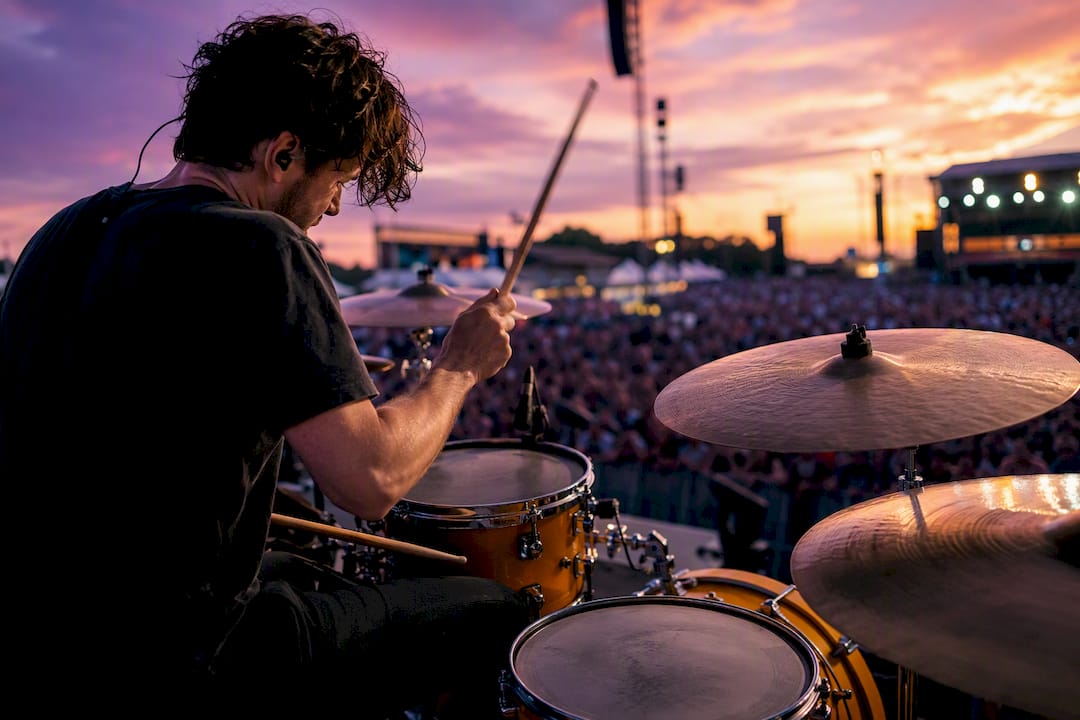
Sponsorship looks different in practice. A drummer running a heavily subscribed YouTube channel might take a one-off paid post from an interface or plugin company timed to a single video, unrelated to any long-term brand commitment. A touring band might have an energy drink or audio brand sponsor a specific leg of a tour, covering costs in exchange for logo placement and social mentions tied to that run of dates. Content creators and producers exploring sponsorship deals with software and plugin companies is one of the fastest-growing corners of this space, and resources like Vector DSP’s rundown of tools for producers show how much crossover exists between drumming, production, and monetized content today.
The difference isn’t prestige, it’s structure. Endorsement builds an identity around a brand over years. Sponsorship funds a specific moment and moves on.
The Real Impact on a Drummer’s Public Image
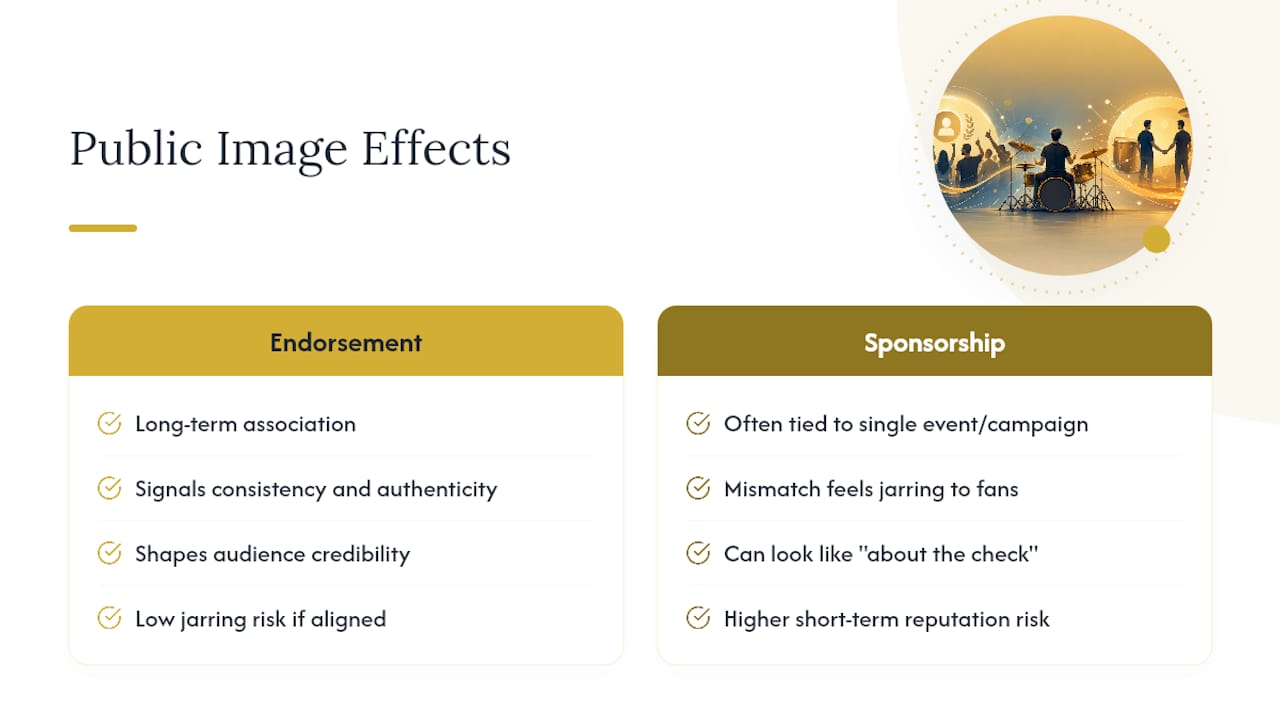
An endorsement becomes part of how audiences see you. If you’re known for playing a specific cymbal line for a decade, that association shapes your credibility as much as your playing does. Fans and other musicians read consistency as authenticity, and inconsistency, switching brands frequently or appearing sloppy about exclusivity, reads as a lack of seriousness.
Sponsorship carries different risk. Because it’s often tied to a single event or campaign, a mismatched sponsor (a brand whose values or audience don’t fit yours) can feel jarring to your following in a way a long-term endorsement rarely does. A drummer known for underground metal suddenly promoting a mainstream consumer product in a single sponsored post risks looking like it’s about the check, not the fit.
Both relationships also shape how brands see each other seeing you. Artist relations teams talk. A drummer who handles exclusivity carelessly on one deal often finds doors closing on the next, while one who’s professional and consistent builds a reputation that opens future conversations before an email is even sent.
What Drummers Get Wrong About These Deals
Most advice treats endorsement and sponsorship as a ladder you climb, free gear at the bottom, cash sponsorships at the top. That framing misleads people. They’re different tools for different problems, not tiers of the same reward. A drummer chasing sponsorship money before building any brand relationship usually gets ignored, because sponsors want proof of an audience first.
The bigger gap I see is drummers treating the EPK as a formality instead of the actual pitch. Brands don’t want enthusiasm, they want numbers and a one-sentence reason you fit their roster over the dozens of other players emailing the same inbox. Skip the flattery. Lead with your gig history and your platform size.
Conventional wisdom also underplays exclusivity risk. Drummers sign the first offer that comes with free sticks without reading what “exclusive” actually restricts, then get blindsided months later. Read that clause before anything else. If you take one thing from this piece, prioritize clarity over speed, a slower, well-documented deal beats a fast handshake every time.
— Will
Sources
- How Do You Get A Drum Endorsement? - Drummer Cafe
- How to Get Drum Endorsements: The Truth Behind Sponsorships
- An Interview With Joe Testa, Vice President of Artist Relations at Zildjian/Vic Firth