2 September 2026
Stop Rattles on Stage: Quiet Drumstick Holders for Gigging Drummers
Stop Rattles on Stage: Quiet Drumstick Holders for Gigging Drummers
For most drummers, a stand-mounted bucket or pouch holder is the smartest buy: it holds enough pairs for a full set, mounts to gear you already own, and stays quiet with a fabric lining. Practice-only players or minimalists can get by with a single-pair clamp instead. Below, you will find how to pick the right type, mount it correctly, and keep it working for years.
TL;DR:
- Bucket or pouch holders are the highest-capacity, quietest options, capable of holding up to ten or twelve pairs, ideal for heavy gigging drummers.
- Clamp compatibility requires measuring stand tubing diameter and checking supported ranges, as improper fit causes slippage or looseness during playing.
- Mounting placement on the hi-hat stand or cymbal stand offers quick access, but clearance and setup vary based on kit design and player handedness.
- Rattling noise often results from worn rubber sleeves or loose clamps, which can be fixed with foam or felt tape, and regular maintenance is essential.
- Most drummers need both a kit-mounted holder for performance and a separate stick bag for transportation, especially if traveling frequently or sharing gear.
Table of Contents
- What Types of Drumstick Holders Are Available?
- What Should You Check Before Buying a Drumstick Holder?
- How Do You Mount a Drumstick Holder for Fast Access?
- How Do You Keep a Drumstick Holder Quiet and Long-Lasting?
- What Do Distributors See That Reviews Miss?
- Drumstick Holder or Stick Bag: Which Do You Actually Need?
- Does One Drumstick Holder Work Across Every Kit Setup?
- How Easy Is It to Install and Remove a Holder?
- How Portable Is Your Drumstick Holder for Transport?
- What Matters Most When Choosing a Drumstick Holder?
- Get the Right Sticks to Match Your New Holder
- Sources
What Types of Drumstick Holders Are Available?
Drumstick holders keep spare sticks, brushes, or mallets within reach so you never have to lean off the throne mid song. But “holder” covers a handful of genuinely different tools, and picking the wrong one is the most common regret buyers report.
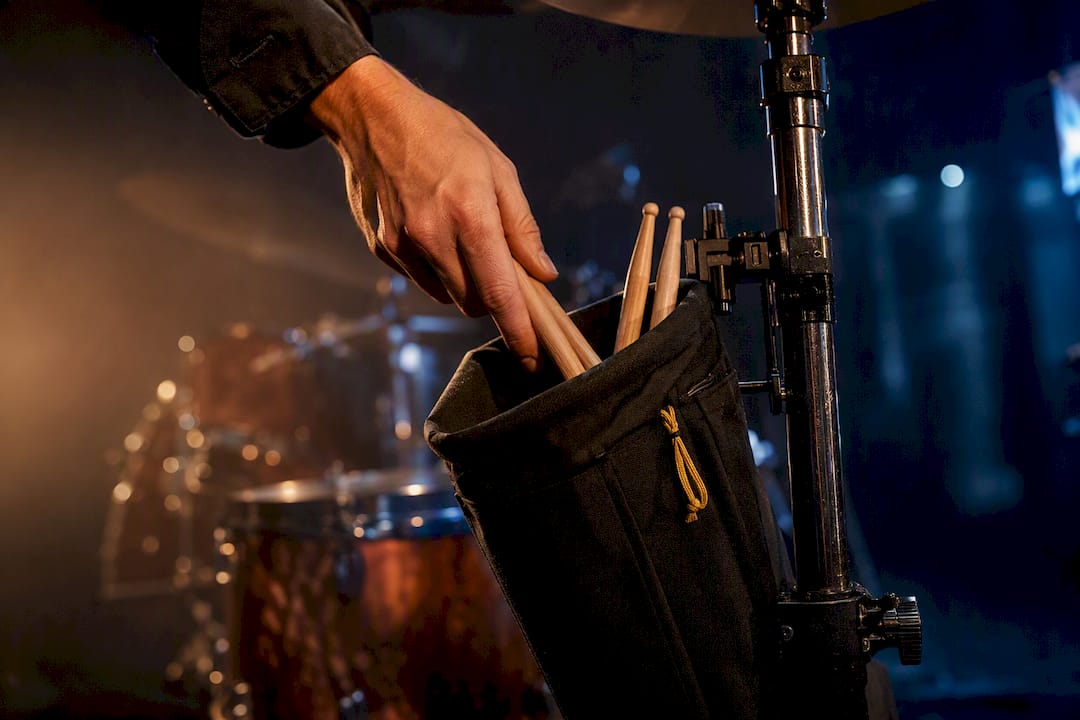
Bucket or pouch holders are soft-sided, cylindrical pockets that clamp to a stand and hold multiple pairs upright, like a pencil cup for sticks. They’re the highest-capacity option and the quietest, since the fabric absorbs contact noise. The tradeoff: they add bulk to your stand and can sway slightly if the clamp isn’t cinched down.
Multi-pair clamp holders use a rigid frame with several individual slots, usually four to six. They hold sticks more securely than a pouch (no shifting around) but rattle more, since stick meets hard plastic or metal instead of fabric.
Single-pair clamp caddies are the minimalist’s tool: one slot, sometimes two, gripping just your backup pair. Fast to reach, cheap to buy, but useless if you play a set that demands three or four stick changes.
Adhesive or strap pockets stick or Velcro directly onto a stand tube or drum shell with no clamp mechanism at all. They’re the most portable and the easiest to install, but the weakest under heavy gigging use, since adhesive backing degrades with heat and repeated packing.
Compact clip-style holders snap onto a rim or hoop rather than a round tube. They’re a niche pick for players who mount toms low or run a minimal cocktail-kit setup.
Here’s how they stack up by player profile:
- Heavy gigging drummers, multiple stick changes: bucket/pouch holder, high capacity and low noise.
- Jazz and brush players: single-pair clamp caddy, fast access without extra hardware crowding the kit.
- Practice-only or bedroom setups: adhesive pocket, cheapest and easiest to remove.
- Metal or hard-rock kits needing rigid stick separation: multi-pair clamp holder, sticks stay locked in position even with aggressive playing.
- Minimal or cocktail kits: compact clip-style holder, mounts where round-tube clamps can’t reach.
What Should You Check Before Buying a Drumstick Holder?
Most buyer regret with drumstick holders traces back to one of three mistakes: the clamp doesn’t fit the stand, the material rattles, or the capacity is wrong for the gig. Fixing all three starts with a tape measure, not a review score.
Clamp compatibility comes first. Most stick holders attach with a clamp to a cymbal or hi-hat stand, and the clamp has to match your tubing diameter or it will either not close or grip loosely enough to spin under vibration. Measure the tube where you plan to mount the holder. Product listings on legitimate holders state a supported diameter range (commonly somewhere in the 0.6 to 1.2 inch band), so check that figure against your own stand before you buy.
Materials matter more than most buyers expect. Fabric and nylon pouches are quiet and light but wear at the stitching over time. Plastic bodies are cheap and durable but transmit more knock noise. Metal frames are the most rugged option and hold their shape under heat and travel, but they need a rubber sleeve at the clamp point or they’ll rattle against your stand. One note on materials: some suppliers choose not to stock nylon-tip products, since nylon production and disposal carry a heavier environmental cost than the alternatives, so factor that into any stick-and-holder pairing you build.
Capacity should match your set, not your collection. A short 45-minute set rarely needs more than two or three backup pairs. A long show with brush breaks, a switch to mallets, or a broken-stick contingency plan justifies a bucket-style holder built to carry up to around ten or twelve pairs.
Price bands track roughly with build quality. Holders typically run somewhere between $15 and $70, with most usable options landing in the $20 to $40 range. Below $15, expect thin clamps and no rubber sleeve. Above $50, you’re usually paying for reinforced metal hardware or a name brand rather than any real functional gain.
Run through this checklist before you check out:
- Measure your stand’s tube diameter and compare it to the listed clamp range.
- Count how many pairs, brushes, or mallets you realistically need mid set.
- Decide if quiet matters more than rigidity, or vice versa.
- Check whether the clamp includes a rubber sleeve or liner.
- Confirm the mounting point (round tube vs rim clip) matches your kit.
Pro Tip: If a product listing doesn’t state a tubing diameter range, message the seller before buying. A clamp that’s “close enough” on paper often means a holder that spins loose by your second song.
How Do You Mount a Drumstick Holder for Fast Access?
Where you mount a holder decides whether you can grab a backup stick without breaking your groove.
The hi-hat stand is the most popular spot, since it sits close to your dominant hand and rarely gets bumped mid fill. The catch is clearance. If your hi-hat clutch or foot pedal sits close to the stand’s lower tube, a bulky pouch can interfere with your pedal motion.
The cymbal stand, especially a crash to your left or right, gives you a wider mounting zone and keeps clutter away from your hi-hat mechanism. It does mean a slightly longer reach.
The floor tom rim works well for drummers who keep brushes or mallets separate from stick pairs, but it’s the mount most likely to catch a stray limb during an aggressive fill.
Throne-side mounts, using a small stand or clamp near your seat, offer the fastest reach of all but only work if your setup has open floor space to spare.
- Right-handed players generally angle the holder slightly toward the snare side; left-handed players mirror that toward the floor tom side.
- Brush players benefit from a slight forward tilt so the brush handles clear the pouch lip cleanly.
- Tighten clamps hand-tight, then add a quarter turn, and always play-test before a real set.
Pro Tip: Mount the holder and simulate a full playing motion before you tighten anything permanently: reach for a stick mid-fill, then check for rotation or slippage at the clamp. That rubber sleeve is usually the first thing to fail, so give it a firm shake test every few gigs.
How Do You Keep a Drumstick Holder Quiet and Long-Lasting?
Fabric pouches collect dust and rosin over time. Wipe them out with a damp cloth every few weeks, and avoid soaking the stitching, since repeated moisture weakens the seams faster than normal wear does.
Noise is the most common complaint with rigid holders. Owners typically fix rattling by adding a soft liner or foam strip between the clamp and the stand tube, or by replacing a worn rubber sleeve outright. A small strip of felt tape on a metal clamp point solves most knock noise in under five minutes.
- Inspect wing nuts and clamp screws monthly; a loose screw is usually the first sign of coming failure.
- Store bucket-style holders uncompressed when possible, since folding them tightly for months can permanently warp the shape.
- Replace a holder once the clamp no longer grips at hand-tight torque or the fabric splits at a seam.
Regular drumstick maintenance habits pair naturally with holder upkeep, since both routines catch small wear issues before a gig, not during one.
What Do Distributors See That Reviews Miss?
Working with stick manufacturers and shops day to day gives you a different read on reliability than any single review can. Retailers consistently flag the same failure point: not the fabric, not the plastic, but the clamp’s rubber sleeve. That’s the part that degrades quietly and fails loudly, usually mid set.
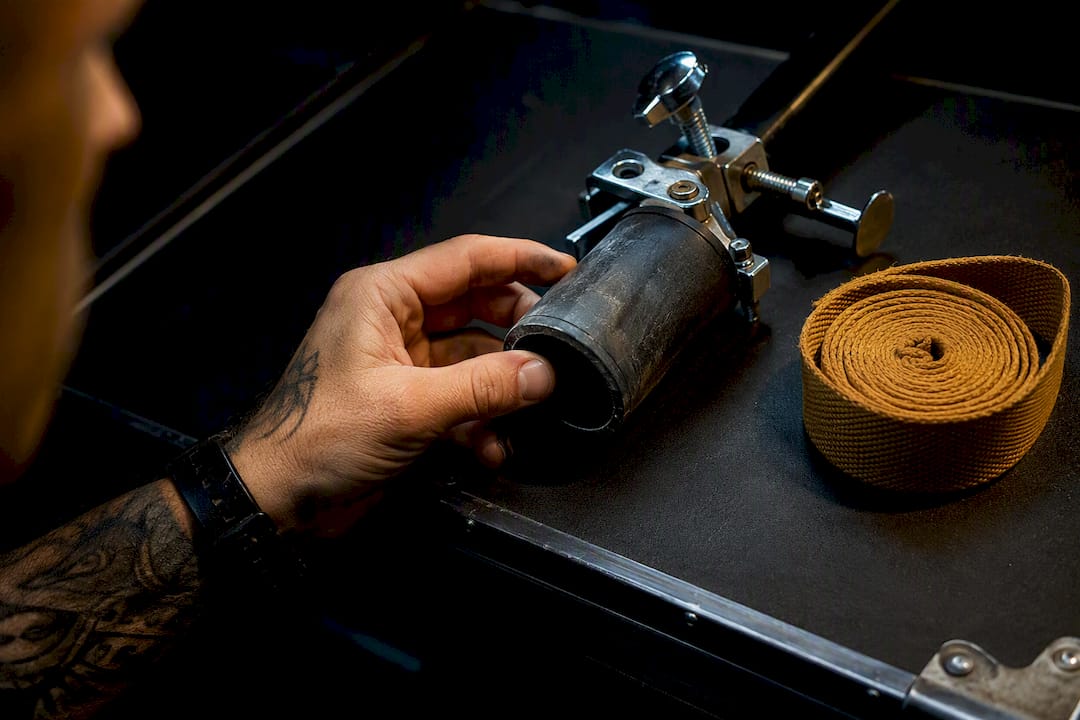
Professional drummers overwhelmingly favor bucket-style holders for the same reason touring techs favor road cases: capacity plus quiet materials beats any amount of rigid engineering. If you’re carrying a set of handcrafted or custom-built sticks, a soft-lined pouch also protects the finish far better than a hard plastic slot, which can chip a nicer stick’s coating over a long tour.
For players mixing stick weights across songs, a multi-pair holder with distinct slots keeps pairs from getting mixed up mid set, which matters more than most players expect once you factor in weight-matched pairs.
Drumstick Holder or Stick Bag: Which Do You Actually Need?
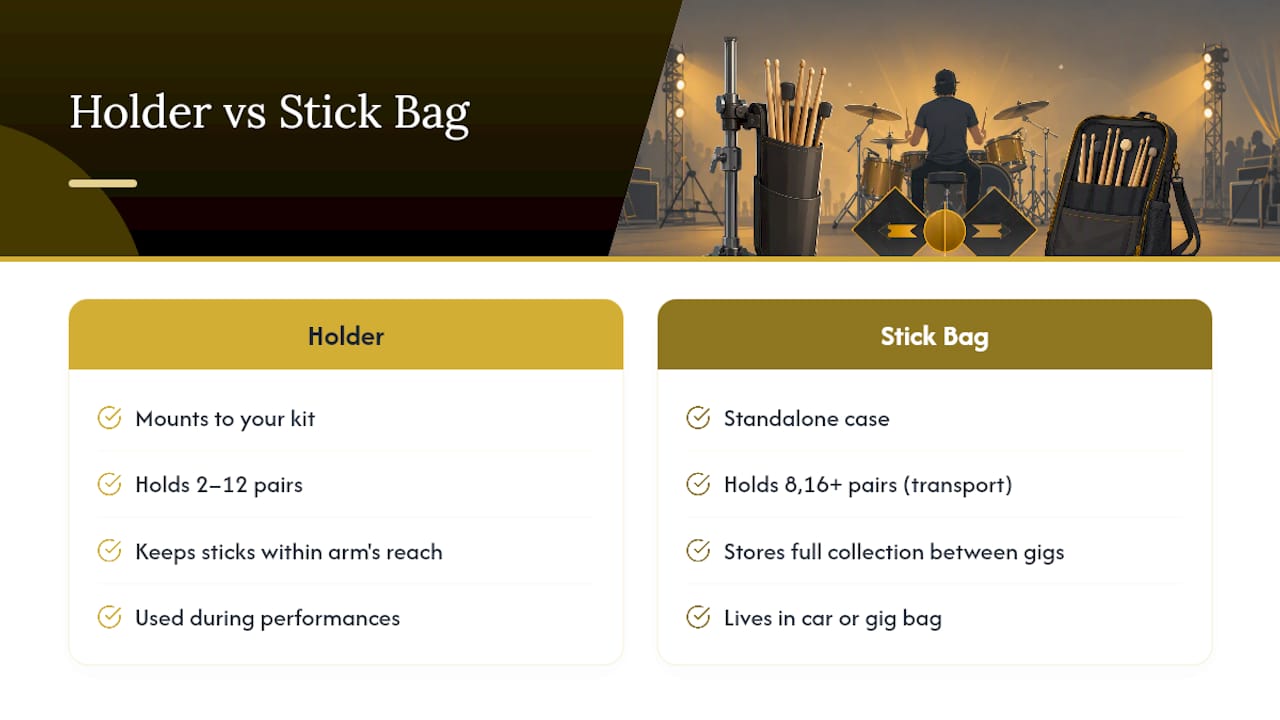
A stick holder and a stick bag solve two different problems, and confusing them is where a lot of buyers waste money.
A holder mounts to your kit and keeps two to twelve pairs within arm’s reach during a performance. A stick bag is a standalone case, usually with pockets for eight, sixteen, or more pairs, designed to transport your full collection between gigs, not to sit on your kit while you play.
The practical answer: most gigging drummers need both; for tips on creating a professional press kit for musicians, see this fast, mobile-ready guide. The stick bag lives in your car or gig bag and carries everything you own, from backups to specialty mallets to brushes you rarely use. The holder lives on your kit and carries only what that specific set requires.
Where it gets situational: solo studio players or drummers with a single fixed setup often skip the bag entirely and just keep a small rotation of sticks in the holder itself, refilling from a drawer at home rather than a bag. Traveling drummers flip that logic, relying on the bag as primary storage and using a minimal single-pair holder on stage just for the emergency backup pair, since airline luggage limits make a full pouch-style holder impractical to check every time.
Does One Drumstick Holder Work Across Every Kit Setup?
Not quite, and genre plays a bigger role here than most buying guides admit.
Rock and metal kits with multiple cymbal stands and wide spacing usually have plenty of clamp real estate, so a bulky bucket holder rarely gets in the way. Jazz kits, often built smaller and tighter with less stand spacing, favor a slim single-pair caddy that doesn’t crowd a compact hi-hat setup.
Electronic and hybrid kits introduce a wrinkle: many electronic stands use thinner or oddly shaped tubing compared to standard acoustic hardware, so a clamp rated for standard round tubes may not seat properly. Always check the tubing shape, not just the diameter, before mounting on a hybrid rig.
Cocktail and compact kits often lack a spare cymbal stand altogether, which is where a rim-clip holder or an adhesive pocket on the bass drum shell earns its keep over a traditional clamp design.
Multi-piece touring kits with several toms and multiple cymbal stands give you the most mounting flexibility, letting you place a holder wherever it clears your fills without a second thought. Smaller kits force more compromise, and that’s usually where a minimalist single-pair caddy or an adhesive pocket wins out over a bigger bucket-style holder.
How Easy Is It to Install and Remove a Holder?
Installation difficulty varies more by clamp design than by holder type, and it’s worth checking before you’re setting up in a dark venue with five minutes on the clock.
Clamp-based holders, whether bucket-style or multi-pair, typically install in under a minute: open the clamp, seat it on the tube, tighten by hand, and give it a quarter turn with a small wrench if the design includes one. Removal is just as fast, which matters if you play multiple kits or borrow house gear at different venues.
Adhesive and strap pockets install even faster since there’s no clamp to adjust, but repeated removal weakens adhesive backing over time. If you’re mounting and unmounting for every gig, a strap-based version holds up better long term than a fully adhesive one.
The one design worth avoiding for frequent setup changes: any holder requiring a screwdriver or tool for basic mounting. It’s not that it fails mechanically, it’s that fumbling for a tool backstage costs you time you don’t have.
How Portable Is Your Drumstick Holder for Transport?
A holder that’s great on stage but awkward to pack is a holder you’ll eventually stop bringing.
Bucket-style pouches usually collapse flat or fold for transport, which keeps them from eating space in a gig bag. Rigid multi-pair clamp holders don’t compress at all, so they take up fixed space in your hardware case regardless of how many sticks are actually in them.
Single-pair caddies and adhesive pockets are the most travel-friendly by far, small enough to toss in a stick bag’s side pocket without a second thought. If you’re the drummer who flies to gigs or shares a van with three other musicians and zero spare space, weight and folded size should outrank capacity when you’re choosing a holder.
What Matters Most When Choosing a Drumstick Holder?
Most buying advice treats drumstick holders like a commodity, any clamp and pouch will do. That’s backwards. The clamp’s rubber sleeve is the single part most likely to fail, and it’s the part nearly every review skips in favor of talking about capacity and color options.
The conventional wisdom oversells capacity. A twelve-pair bucket sounds impressive, but if you’re a three-piece cover band drummer who never touches more than two backup pairs a night, that extra capacity is dead weight on your hi-hat stand. Buy for your actual set list, not your stick collection.
If you take one thing from this guide, prioritize the clamp before the pouch. A gorgeous fabric holder with a loose or unlined clamp will drive you crazy by your third gig, rattling on every fill and slowly rotating out of position. Test the shake, check the sleeve, and only then worry about how many pairs it holds.
— Will
Get the Right Sticks to Match Your New Holder
Once your holder is sorted, the sticks you put in it matter just as much. There are sources offering handcrafted drumsticks from London Drumstick Co. without guessing whether a generic pair will hold up to your playing style or fit your holder’s slots cleanly.

Some sellers offer custom stick builders that let you configure weight, wood, and tip shape so every pair in your holder matches your technique, and provide maintenance guides to help keep both sticks and hardware in playing shape between gigs. If you’re weighing oak against hickory for your next set, that’s covered too. Head to Templeofsound to browse the current lineup and build a set worth protecting in a good holder.
Sources
- The 5 Best Drum Stick Holders (2026) | Drum Helper
- 9 Best Drumstick Holders 2026 - Music Industry How To
- Rayzm Drum Stick Bag Holder (product page)