22 September 2026
Stop Returns: Temple of Sound's M8 Cymbal Stacker Buying and Setup Advice
Stop Returns: Temple of Sound’s M8 Cymbal Stacker Buying and Setup Advice
A cymbal stacker adapter is a threaded hardware piece that lets you mount a second cymbal directly on top of another, on the same stand. For most setups, a short 4" or 6" straight stacker handles the job cleanly and keeps your stand footprint tight. If you want the top cymbal angled or offset for extra articulation, a boom stacker is the better call. Either way, check that it fits a standard 8mm (M8) threaded tilter before you buy.
TL;DR:
- A standard 8mm (M8) thread fits most cymbal tilters, so confirm your stand matches this before purchasing a stacker.
- Short 4-6 inch straight stackers are stable, compact, and suitable for most situations, while taller or boom models offer more articulation at a higher cost.
- Felts, washers, and wingnuts are usually included but verify, and proper assembly prevents wobbling and loss of cymbal tone.
- Heavier crash cymbals benefit from taller posts to avoid choking the sound, especially when stacking a large 20-inch cymbal.
- Budget models work well for occasional use, but spend more for adjustable or offset stackers if you need frequent articulation and precise positioning.
Table of Contents
- What Types of Cymbal Stacker Adapters Are There?
- What Specs Should You Check Before You Buy?
- How Do You Install and Adjust a Cymbal Stacker?
- How Does Stacking Change the Sound?
- How Do You Maintain a Stacked Cymbal Setup Safely?
- What Should You Start With?
- What Do Cymbal Stacker Adapters Cost?
- Do Stackers Work With Any Cymbal Brand?
- Does Build Material Affect How a Stacker Performs?
- What Do Drummers Actually Say About These Adapters?
- What Should You Ask Before You Buy One?
- What Are the Warranty and Return Terms?
- A Drummer’s Quick Take on Stackers
- Get the Right Cymbals to Match Your Stacker Setup
- Sources
- FAQ
What Types of Cymbal Stacker Adapters Are There?
Walk into the hardware aisle of any drum shop and you’ll find four basic shapes doing the same job in different ways. Picking the right one comes down to how much space you have on your stand and how much independent movement you want the top cymbal to have.
Straight mini stackers are the simplest and most common style. They’re short metal posts, typically 4" or 6" tall, that thread directly onto your existing cymbal tilter rod. DW’s 8mm cymbal stacker stands 4 inches tall and uses that same 8mm thread to let you add a second cymbal on top of a crash or ride without buying another stand. This is the style most drummers reach for first, and for good reason: it’s compact, stable, and cheap to add to a kit that’s already tight for space on stage.
Taller straight posts work the same way but give more air between the two cymbals. That extra gap changes the sound more than you’d expect. More separation between the plates means a longer, more open decay and less immediate choke, so if your bottom cymbal is a heavier 18" or 20" crash, a taller post keeps the pair from sounding too tightly clamped together.
Boom or offset stackers add a short arm that shifts the top cymbal away from dead center. Gibraltar’s SC-BCSA Boom Cymbal Stacker fits most standard 8mm tilters and gives the top cymbal room to swing and speak on its own, rather than sitting locked flush against the bottom one. Drummers who want articulation, not just a trashy blend, tend to favor this design because it lets the top cymbal move independently.
Adjustable-height and angle-capable stackers split the difference. Some models built around this concept market themselves on adjustable height and improved stability, letting you fine-tune spacing without buying multiple fixed-length posts. Tama’s product lineup includes a stacker with independent angle adjustment, so the top cymbal can be positioned at a tilt separate from the bottom one, which is handy when you’re chasing a specific playing angle rather than a flat stack.
Quick rundown of tradeoffs:
- Short straight stacker: most stable, most compact, least articulation.
- Tall straight stacker: more decay and separation, slightly less compact.
- Boom stacker: best articulation and independent movement, adds a small footprint.
- Adjustable/angle model: most flexible setup, usually costs a bit more.
What Specs Should You Check Before You Buy?
Almost every stacker on the market uses the same thread standard, but it’s worth confirming before you order. Get this wrong and you’re stuck sending it back.
The industry standard is an 8mm thread, also written as M8, matching the tilter rod on the vast majority of modern cymbal stands. Both DW’s cymbal stacker and PDP’s cymbal stacker specify this thread size, and PDP notes its stacker fits most cymbal stands right out of the box. To confirm your own stand matches, look at the exposed threaded rod above your current wingnut. If it’s the same diameter your cymbal felt sleeve slides over now, you’re almost certainly looking at 8mm.
Post height matters more than people assume. A 4" post keeps things tight and stage-friendly. A 6" post opens up more air between cymbals for a looser, less choked blend. Anything taller starts to introduce wobble unless the stand itself is heavy-duty.
Pro Tip: If you’re mounting a stacker over an already-heavy 20" crash, go with the taller post. The extra height keeps the top cymbal from resting so close that it deadens the bottom cymbal’s natural ring.
What should come in the box:
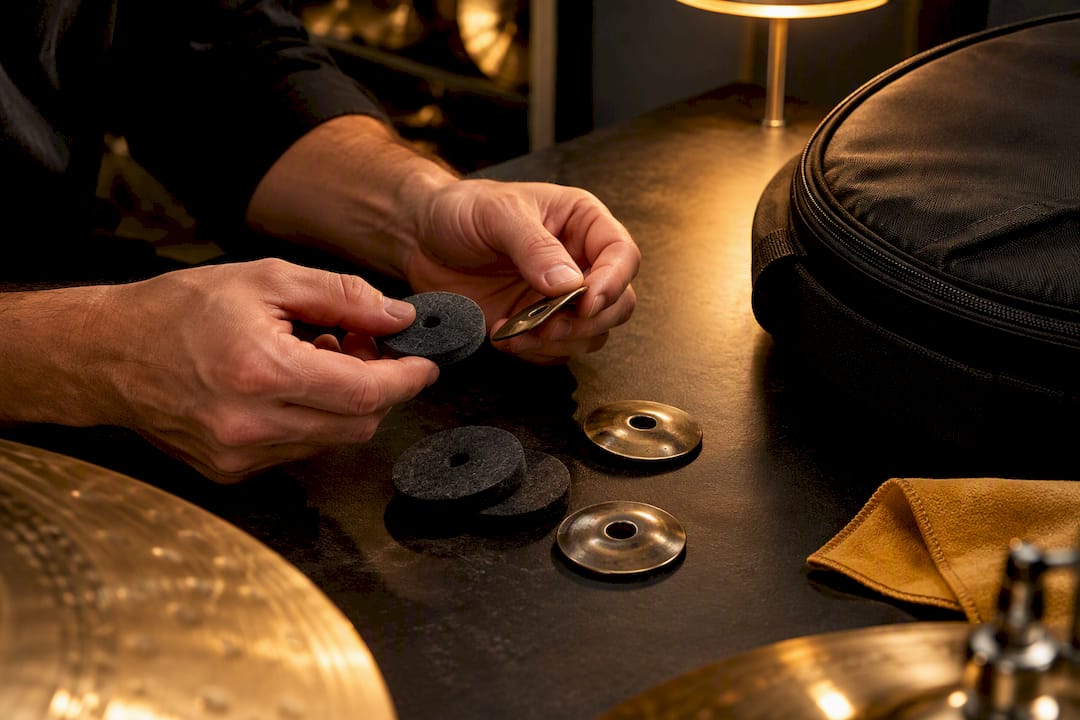
- A felt sleeve or washer for the bottom of the stack.
- A top felt to cushion the underside of the second cymbal.
- A wingnut sized to the 8mm thread.
PDP’s listing and other retailer pages routinely note two felts included as standard. If a listing doesn’t mention felts, budget for a spare set. Before buying, measure the clearance between your current cymbal and the tilter’s felt cup. If you’re already running the cymbal close to a boom arm or another cymbal, a boom stacker’s offset arm may bump into neighboring hardware. A straight stacker avoids that entirely since it stays vertical.
How Do You Install and Adjust a Cymbal Stacker?
Installing one takes a few minutes once you know the order of operations. Follow this checklist and you’ll avoid the two most common mistakes: crushing the tone out of your cymbals and letting the top one wobble loose.
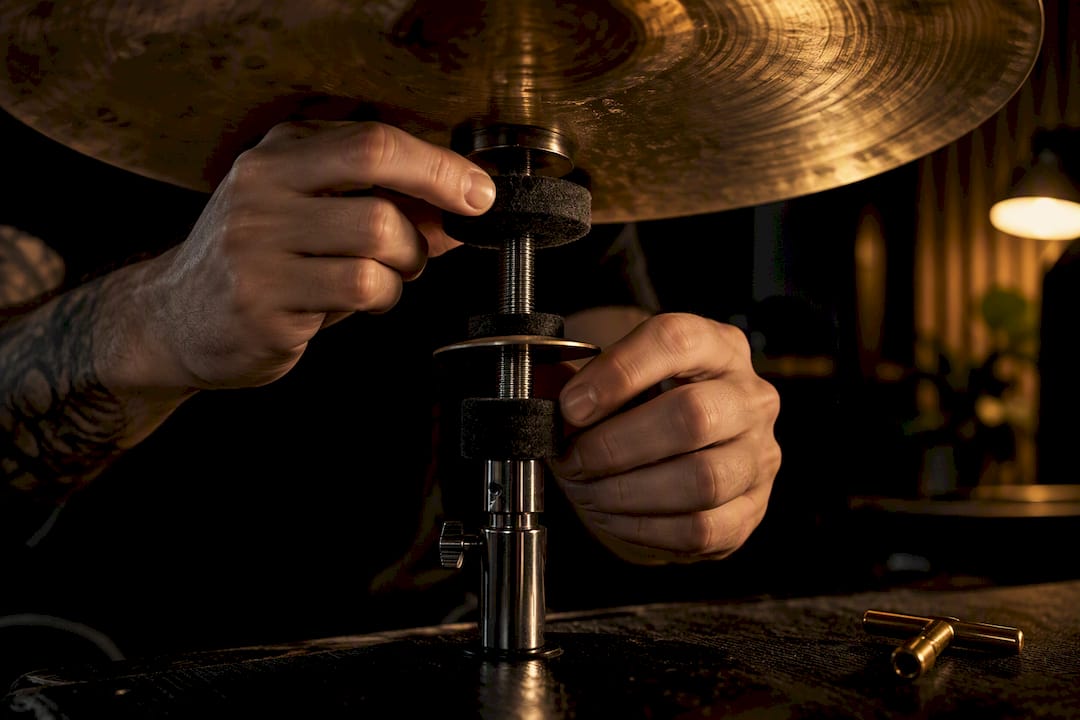
- Slide your bottom cymbal onto the tilter rod over its existing felt sleeve, same as always.
- Place a felt on top of the bottom cymbal’s bell.
- Add a washer over that felt. Retailers and forum threads consistently point to the washer trick for keeping a larger bottom cymbal from sliding around without cranking the wingnut down too hard.
- Thread the stacker post onto the rod, screwing it down until it sits snug against the washer.
- Set your top cymbal onto the stacker’s felt cup.
- Secure the top wingnut, but leave enough play that the cymbal can still rock slightly. Locking it bone-dry tight kills the natural movement that gives cymbals their voice.
If you’re running a boom stacker, there’s an extra step: position the arm before you tighten anything down. Aim the offset so the top cymbal clears your sticks on the downstroke and doesn’t collide with a neighboring ride or hi-hat. Angle it slightly toward you if you want easier reach on accent hits.
Pro Tip: If the stack wobbles once it’s mounted, the fix is almost never a tighter wingnut. Check that the felt sizes match the bell openings on both cymbals first. A felt sleeve that’s too small lets the whole stack rock side to side no matter how hard you tighten.
Give the whole rig a shake test before soundcheck. If anything shifts more than a slight wobble, back off, reseat the felts, and retighten evenly rather than cranking harder on one side.
How Does Stacking Change the Sound?
Two cymbals mounted together don’t just sound louder. They interact, and that interaction is the whole point of stacking in the first place.
MusicRadar’s guide to cymbal stacks explains that stacking produces a trashy, aggressive attack with a noticeably faster decay than either cymbal would give alone. Spacing and metal choice both push that character further in one direction or another. Tighter spacing and similar-sized cymbals lean into that choked, trashy blend. More space and mismatched sizes open things back up and let some of each cymbal’s individual character survive.
Common pairings worth trying:
- A small splash over a crash for a short, aggressive accent.
- A tiny splash over a ride for a subtle textured edge on ride patterns.
- Mixing bronze alloys (B8 over B20, for instance) for extra contrast in overtones.
Where you strike matters just as much as what you stack. Hitting near the edge brings out more of the trashy top-cymbal character. Hitting closer to the bell emphasizes the fatter fundamental of the bottom cymbal. If you want the stack to ring out, avoid resting your stick or hand on it after the hit. If you want a tighter, more controlled accent, a light touch of muting right after the strike shortens the decay further.
Stacks earn their keep in fills, single accent hits, and short textural moments rather than as a full-time ride replacement. Overusing the effect on every backbeat gets tiring fast for both drummer and listener.
How Do You Maintain a Stacked Cymbal Setup Safely?
A quick check before every session keeps a stacked setup sounding right and stops hardware from wearing out early.
- Inspect felts for compression or splitting. Flattened felts lose their cushioning and let metal touch metal.
- Check the sleeve and threads for burrs or rust that could scratch your cymbal’s bell.
- Confirm the wingnut still threads smoothly. A stripped thread means it’s time to replace the wingnut, not force it.
Pro Tip: Always leave a hair of play in the top wingnut. A cymbal clamped too tight loses its ring and can develop stress cracks near the bell faster than one allowed to move naturally.
For transport, stack cymbals loosely in padded bags rather than leaving them mounted on stands. When felts flatten out or washers start to look bent, replace them before your next gig. They’re inexpensive compared to the crash or ride they’re protecting, and worn felts are the number one cause of that annoying metallic buzz drummers chase for weeks before finding the real culprit.
What Should You Start With?
Many percussion retailers and distributors work directly with drummers building out compact, versatile setups, and the same logic applies whether you’re buying your first stacker or your fifth. For general use, a short 4" or 6" straight stacker covers the widest range of situations: compact, stable, and easy to dial in without extra parts to fuss over. Reach for a boom stacker only once you know you want that independent articulation.
Pairing cymbal choice with the right adapter matters just as much as the hardware itself. If you’re deciding what to stack on top of what, the splash cymbal size guide and ride cymbal sizing breakdown both cover pairing logic in more depth.
What Do Cymbal Stacker Adapters Cost?
Basic straight stackers sit at the affordable end of drum hardware, generally cheaper than a single mid-range cymbal. Boom and offset models cost more because of the extra arm and pivot hardware, and adjustable-height or angle-capable models tend to sit at the top of the price range since they pack in more moving parts.
The value comparison isn’t really about which one is “best.” It’s about matching the extra cost to what you actually need. The extra money in a boom stacker buys you independent articulation and offset positioning, which matters if you’re layering effects live and need the top cymbal to move and speak on its own. If you’re stacking occasionally for a fill or two per set, the cheaper straight post is money well spent. If stacking is central to your sound night after night, the boom or adjustable option earns its higher price through flexibility you’ll actually use.
Buy once and buy the right style for your playing rather than upgrading twice. A cheap stacker that gets replaced within a year because it lacked the articulation you needed ends up costing more than the pricier option would have upfront.
Do Stackers Work With Any Cymbal Brand?
The good news is the 8mm thread standard means a stacker isn’t tied to a specific cymbal brand. It attaches to your stand’s tilter rod, not to the cymbal itself, so a Gibraltar or Tama stacker works just as well under a bronze cymbal from one manufacturer as under one from another.
Material and weight are what actually affect compatibility. A heavier, thicker bottom cymbal (typical of many B20 bronze crashes) needs a sturdier post and a properly sized felt sleeve to stay centered without wobble. Thinner, lighter cymbals, common in some B8 bronze and brass-alloy lines aimed at beginners, sit more loosely on the same post and may need a slightly smaller washer to keep them from sliding.
Bell size and cymbal cup shape vary more between manufacturers than the mounting hole does. If your bottom cymbal has an unusually large bell, double check that the stacker’s felt cup and washer can seat properly without the cymbal riding too high or too low on the post. Beyond that, brand mixing is common practice among drummers building stacks. Pairing a budget splash with a higher-end crash, or mixing alloys entirely, is exactly how a lot of interesting stacked textures get discovered in the first place.
Does Build Material Affect How a Stacker Performs?
Cheap stamped-steel stackers work fine for occasional use, but they show their limits over time. Thin metal threading can strip after repeated tightening and loosening, especially if you’re breaking down and setting up your kit multiple times a week.
Solid, machined posts with properly cut threads hold up far longer under that repeated stress. They’re also less likely to bend under the weight of a heavier bottom cymbal, which matters if you’re stacking two full-size crashes rather than a lightweight splash on top. The wingnut matters too. A wingnut cast from soft metal wears down faster and starts slipping instead of gripping, which is often the real reason a “wobbly” stack traces back to hardware fatigue rather than a technique mistake.
If you gig several nights a week, spend a little more for a stacker with solid machined threads and a quality wingnut. Occasional studio or bedroom use puts a lot less stress on the hardware, so a budget model will likely hold up fine for years under lighter use.
What Do Drummers Actually Say About These Adapters?
Feedback across retailer reviews and drum forums lands on a few consistent points. Drummers praise straight stackers for being genuinely set-and-forget: thread it on, add felts, and it works without fuss for years. The most common complaint isn’t about the stacker itself but about buyers skipping the felt check and ending up with a rattly, buzzy stack that sounds like loose hardware rather than a musical effect.
Boom stackers draw more mixed feedback. Drummers who wanted articulation tend to love them, while a few reviewers note the extra arm needs careful positioning or it interferes with sticking patterns on a crowded kit. That’s less a flaw in the hardware and more a reminder to plan your cymbal layout before adding one.
Adjustable and angle-capable models get consistent praise for flexibility but occasional notes that more moving parts means more to check before a gig. The recurring theme across nearly every review, regardless of style, is that included felts and washers make or break the first impression. A stacker that ships with proper felts feels solid from the first setup. One that doesn’t leaves buyers scrambling for spare parts before they can even judge the sound.
What Should You Ask Before You Buy One?
A few quick questions to a seller or straight to a manufacturer’s spec sheet can save you a return shipment and a frustrating first setup.
- Does this fit an 8mm/M8 threaded tilter, and is that stated explicitly on the product page?
- What post height does this ship in, and are other heights available if this one doesn’t fit my rig?
- Does it come with felts, a washer, and a wingnut, or do I need to buy those separately?
- If it’s a boom or offset model, how far does the arm extend, and will it clear my other cymbals?
- Is this listed as compatible with heavier bottom cymbals, or is it built for lighter splash and effect use only?
Asking these before checkout, rather than after the box arrives, is the difference between a stacker that works on the first try and one that sits in a drawer because the post was too short or the thread didn’t match.
What Are the Warranty and Return Terms?
Warranty coverage on cymbal stackers varies by manufacturer and retailer, so it’s worth checking the specific listing before you buy rather than assuming blanket coverage. Most hardware manufacturers cover manufacturing defects, like a stripped thread straight out of the box or a cracked post, for a set period after purchase, though the exact length depends on the brand.
Return policies through retailers typically apply if the item arrives damaged or turns out to be the wrong thread size for your stand, which is exactly why confirming the 8mm/M8 spec before ordering matters so much. Once felts have touched cymbals and the piece has seen actual use, most retailers won’t accept a return for buyer’s remorse alone. Read the specific return window and condition requirements on whichever retailer’s page you’re ordering from, since these details differ from one seller to the next and aren’t standardized across the industry.
A Drummer’s Quick Take on Stackers
Rule of thumb: if your bottom cymbal is a heavier crash, go one size taller on the post than you think you need. A 4" post under a big 20" crash tends to choke the stack more than most drummers want. Save boom stackers for the moment you actually want an accented, offset effect, not as a default upgrade from a straight post.
Do check felt sizing against the bell before you blame the hardware for wobble. Don’t crank the top wingnut all the way down just because it feels more secure. That’s usually the fastest way to kill the exact tone you added a second cymbal to get.
— Will
Get the Right Cymbals to Match Your Stacker Setup
Some UK distributors offer access to the Alchemist Collection, handcrafted cymbals built to pair well in stacked setups without the guesswork of hunting through generic mass-market lines.

Membership through Templeofsound adds ongoing value beyond the first purchase. A Pro Member plan runs £4.99 per month, and VIP Member access runs £9.99 per month, both built around discounts and support for drummers who buy regularly rather than once. If you’re still deciding which bottom and top cymbal combination fits your stack, browse the Alchemist Collection cymbal pages and check current membership pricing before your next order.
Sources
These sources back the technical details and playing advice covered above:
- DW 8mm Cymbal Stacker, 4″ | Drum Workshop Inc.
- Gibraltar SC-BCSA Boom Cymbal Stacker
- Cymbal stack options and how to make your own | MusicRadar
FAQ
What Is a Cymbal Stacker Adapter Used For?
It’s a threaded hardware piece that mounts a second cymbal directly on top of another on the same stand, creating a trashy, layered sound without needing an extra stand. It’s popular for adding quick textures to fills and accents without cluttering your setup.
What Thread Size Do Most Cymbal Stackers Use?
Nearly all modern cymbal stackers use an 8mm, also called M8, thread to match standard cymbal stand tilters. Check your stand’s exposed rod diameter against the listing before ordering to confirm the match.
Should I Get a Straight Stacker or a Boom Stacker?
A short straight stacker suits most drummers because it’s compact, stable, and simpler to install. Choose a boom stacker instead if you want the top cymbal offset and angled independently for more articulation.
Do Stackers Come With Felts and Washers Included?
Many stackers, including PDP’s 8mm model, ship with felts included, though it’s worth confirming on the specific product listing. If felts aren’t included, budget for a spare set since proper felt sizing prevents rattle and buzz.
How Much Should I Spend on a Cymbal Stacker Adapter?
Basic straight stackers are among the cheapest pieces of drum hardware you can buy, while boom and adjustable-height models cost more for the added articulation and flexibility. Match the price to how often you actually use the stacking effect rather than buying the priciest option by default.
Where Can I Buy Cymbals That Pair Well With a Stacker?
Templeofsound’s Alchemist Collection offers handcrafted cymbals suited to stacked setups, and current pricing and membership discounts are available directly on the site.