18 September 2026
Stop Guessing: 14/16/20 Cymbal Pack Picks for Beginners & Intermediates
Stop Guessing: 14/16/20 Cymbal Pack Picks for Beginners & Intermediates
A cymbal pack is the right move for nearly every beginner and most intermediate players upgrading a first kit, because it delivers a matched, balanced set for less than buying each piece separately. The universal starter setup is a 14" hi-hat, 16" crash, and 20" ride. Metal players should size up the crash to 17"-18"; jazz players should size down the ride to 20". Skip packs only if you already know your exact sound and want to build piece by piece.
TL;DR:
- Most beginner and intermediate drummers will benefit from a cymbal pack that includes a 14-inch hi-hat, 16- or 18-inch crash, and a 20-inch ride for versatile sound coverage.
- Larger crashes (17-18 inches) are preferred for metal genres, while jazz players typically use smaller or thinner cymbals for dynamic responsiveness.
- Buying a matched set ensures tonal cohesion, but mixing series can work once you know the specific sounds you want to achieve.
- The alloy and manufacturing process significantly affect cymbal tone and durability, with B20 bronze and hand-hammered cast cymbals being high-end options.
- Proper cleaning, mounting, and storage extend cymbal lifespan, and testing for articulation, sustain, projection, and response is vital before purchasing.
Table of Contents
- What’s Included in a Cymbal Pack, and What Does Each Piece Do?
- How Do Different Cymbal Types Actually Sound and Behave?
- How Should You Choose the Right Cymbal Pack for You?
- What Are the Best Starter Cymbal Pack Configurations?
- Why Do Alloy and Manufacturing Method Change How a Cymbal Sounds?
- How Do You Clean and Store a Cymbal Pack Properly?
- Why Temple of Sound Is a Practical Resource for Cymbal Buyers
- A Practical Take on Buying Your First Cymbal Pack
- Ready to Build Your Cymbal Setup?
- Sources
- FAQ
What’s Included in a Cymbal Pack, and What Does Each Piece Do?
A standard pack covers the three cymbals every drummer needs before anything else: a hi-hat, a crash, and a ride. Together they handle rhythm keeping, accents, and groove texture, which is why manufacturers build packs around this trio rather than around splash or china cymbals. Most packs put the hi-hat first at 14 inches, the ride second at 20 to 22 inches, and one crash at 16 or 18 inches, with anything beyond that treated as an add-on rather than a core piece.
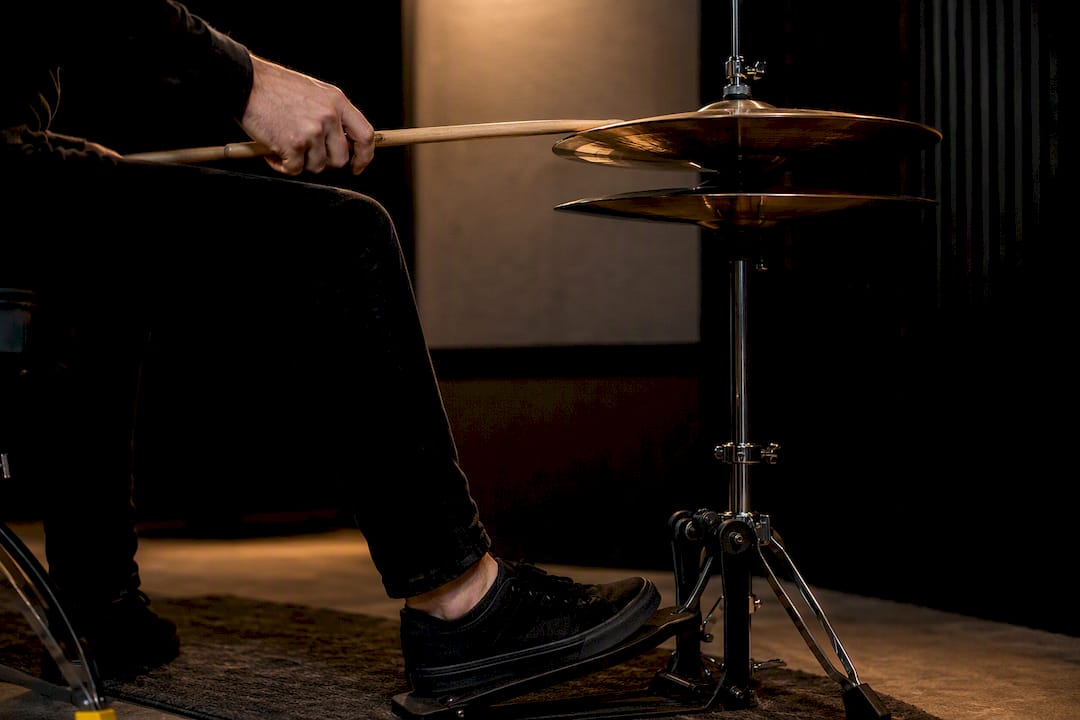
The hi-hat is two cymbals mounted on a stand and controlled with a foot pedal. It drives tempo and groove, and it’s the piece you’ll hit more than any other cymbal on the kit.
The crash punctuates. It marks the end of a phrase, a big fill, or a dramatic hit, and it’s usually the loudest, most explosive sound in the pack.
The ride carries the beat during verses, solos, or quieter sections where the hi-hat would feel too busy or too tight. It’s built for repetition without fatiguing the ear.
Beyond the core three, packs sometimes add:
- Splash cymbal (8"-10"): a quick, bright accent, popular for filling gaps between crash hits.
- China cymbal (14"-18"): a trashy, aggressive sound used for dramatic accents in rock and metal.
- Second crash: gives you two different crash voices, useful once you’re playing live regularly.
- Effects or stack cymbals: small paired or layered cymbals for texture, more common in studio and modern pop/rock setups.
Which pack works for you depends on what you’re actually doing with it. A player practicing at home mostly needs the core three and a quiet room. Someone tracking in a studio benefits from a pack with more tonal variety, since microphones pick up nuance a live room swallows. A gigging drummer wants projection above all else, because a cymbal that sounds great in your bedroom can disappear under a full band on stage.
How Do Different Cymbal Types Actually Sound and Behave?
Every cymbal type has a job, and understanding what each one is built to do makes reading a pack’s spec sheet far less confusing.
Hi-hats are the foundation. A 14" pair is the standard size for a reason: it balances tight articulation with enough body to cut through a mix. Going slightly smaller gives a quicker, more clipped sound favored in some jazz settings, while going slightly larger adds more wash and low end, useful in louder rock contexts where the hats need to hold their own against distorted guitars. Listen for how cleanly the “chick” closes and how much sizzle survives when they’re open.
Crashes trade size for decay time. A smaller 14"-16" crash speaks fast and dies out quickly, which suits busy playing where you need to crash and immediately get back to the beat. An 18"-20" crash takes longer to open up and rings out longer, which works for slower, more dramatic music but can feel sluggish in fast rock or metal. There’s no wrong answer here, only a mismatch between decay length and tempo.
Rides split into two behaviors: ping and wash. A ping ride gives you a clear, defined stick sound on each hit, which is what most rock and pop drumming wants. A wash ride blends each hit into the last, building a cloud of sound that jazz drummers lean on for texture under a soloist. The bell (the raised center) matters too. A bigger, more pronounced bell gives you a louder, more cutting accent option, which live drummers use constantly to signal song sections.
Splash and china cymbals are seasoning, not the main course. A splash gives a quick burst of brightness; a china gives a darker, trashier crash alternative. Neither replaces your primary crash. Add them once you know what’s missing from your sound, not because a pack happened to include one.
When you’re standing in front of a cymbal, or listening to an online demo, run through the same checklist Percussion Source recommends professionals use:
- Articulation: how clearly you hear the stick attack versus a blurry wash.
- Sustain: how long the sound rings before it dies out.
- Projection: how well it cuts through a full band at volume.
- Response: how the cymbal reacts to both light taps and hard hits.
A cymbal that nails articulation but has weak projection will sound great alone and disappear on stage. One with huge sustain but poor articulation will muddy up fast passages. There’s always a tradeoff, and knowing which one you’re making is the whole point of testing before you buy.
How Should You Choose the Right Cymbal Pack for You?
Start with genre, not spec sheets. Genre tells you what job the cymbals need to do, and every other decision (size, weight, alloy, price) flows from that.
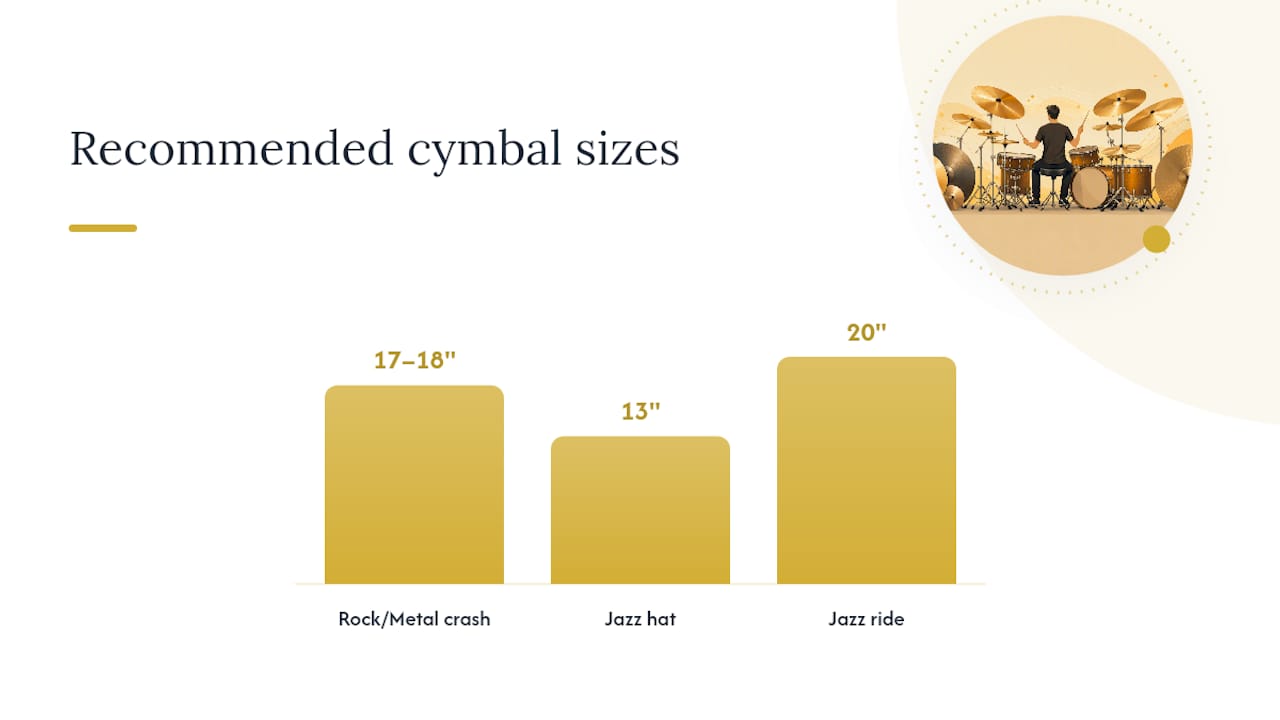
1. Match sizes to your musical context. Rock and metal players generally want bigger crashes (17"-18") for more sustain under distortion, and larger, heavier hi-hats for more cut. Jazz and acoustic players usually want smaller, thinner cymbals (13" hats, 20" rides) that respond to dynamics without overwhelming an unamplified room. If you’re playing at home or recording quiet material, thinner and smaller almost always beats bigger and louder.
2. Understand weight before size. A thin cymbal speaks fast, responds to light touches, and has a lower pitch. A heavy cymbal takes more force to open up, projects harder, and holds its pitch better under aggressive playing. Two cymbals of identical diameter can sound like completely different instruments depending on thickness, so don’t judge a pack by size alone.
3. Know your alloy. B20 bronze (80% copper, 20% tin) is the traditional professional alloy, prized for complex overtones and longevity. B8 and B12 alloys show up in budget and mid-tier lines, delivering brighter, simpler tones with less complexity but a lower price tag. Neither is “wrong,” they’re built for different budgets and different ears. A beginner won’t necessarily hear the difference a working session drummer notices instantly.
4. Check finish and profile. A raw, unlathed finish tends to sound darker and more textured. A brilliant, polished finish sounds brighter and cuts more. A bigger bell gives you a louder, sharper accent for song transitions; a smaller bell blends more smoothly into the wash. None of this shows up in a photo, which is exactly why a listening test matters more than a spec sheet.
5. Set your budget and decide new versus used. A new entry-level pack from a mid-tier alloy line typically runs cheaper than buying single premium cymbals piece by piece, and it guarantees a set that’s designed to sound cohesive together. But used premium B20 cymbals are often a smarter buy than new budget cymbals if you already know the sound you want. Bronze cymbals age well, developing more complexity over years of play, and a well-kept used set can outperform a brand-new low-tier pack at a similar price.
Pro Tip: When shopping online, ask the retailer for a recorded audio sample or A/B comparison video before you buy. Reputable sellers now record individual cymbals so remote buyers can judge tone without ever holding the piece, which closes most of the gap between shopping in a store and shopping from your couch.
Before you commit to any pack, run this quick check whether you’re in a shop or watching a video demo:
- Does the hi-hat close cleanly, or does it sound loose and washy when you don’t want wash?
- Does the crash decay at a speed that matches your tempo, or does it ring on too long?
- Does the ride give you a clear stick sound, or does it blur into a cloud after a few hits?
- Does the bell cut sharply enough to use as a separate accent?
- Does anything rattle, buzz, or sound thin when struck at full volume?
What Are the Best Starter Cymbal Pack Configurations?
Three configurations cover almost every new drummer’s needs, and picking the right one comes down to genre more than budget.
- Balanced starter (general use): 14" hi-hats, 16" crash, 20" ride. This is the most common cymbal pack recommendation because it handles rock, pop, and general practice without leaning too hard in any direction.
- Rock/metal starter: 14" heavy hi-hats, 17"-18" crash, 20"-21" ride with a pronounced bell. The extra size and weight give you the projection and sustain louder genres demand.
- Jazz/low-volume starter: 13"-14" thin hi-hats, 16" thin crash, 20" ride with a wash-heavy character. Lighter weights respond better to brushes and dynamic playing at low volume, which also makes this configuration a strong pick for apartment practice.
Once the core three feel solid, most players expand to a four-piece setup by adding an 8" or 10" splash for quick accents, or a five-piece by adding a china for aggressive crash alternatives. There’s no fixed order here. Add whichever piece is missing from your actual playing, not whichever one looks impressive in a pack photo.
One practical decision worth thinking through early: buy a matched series pack, or mix and match individual pieces? A single-series pack guarantees the cymbals were voiced to sit together tonally, which is exactly why manufacturers sell them as sets in the first place. Mixing brands and series works well once you have a clearer sense of the specific sounds you’re chasing, but it takes more trial and error to land on a combination that blends. If you’re buying your first set of cymbals, a matched pack removes that guesswork entirely.
Why Do Alloy and Manufacturing Method Change How a Cymbal Sounds?
Alloy is the single biggest factor separating a $150 pack from an $800 one, and it’s worth understanding before you assume “expensive” just means “better marketing.”
- B20 bronze (80% copper, 20% tin) produces complex, layered overtones and holds up over decades of play, which is why nearly every professional-tier cymbal uses it.
- B12 bronze sits in the middle, offering a step up from entry alloys with a brighter, more direct tone than B20 but less complexity.
- B8 bronze is the most common entry-level alloy: brighter, simpler, and less expensive to manufacture, with a shorter usable lifespan under heavy play.
Manufacturing method matters just as much as the alloy itself. Cast cymbals are poured and shaped from a single piece of molten alloy, then hand or machine hammered, producing more complex overtones and typically commanding a higher price. Sheet cymbals are cut from rolled alloy sheets and stamped into shape, a faster and cheaper process that produces a brighter, simpler tone. Hand-hammering adds irregular texture that breaks up overtones for a more organic sound; machine hammering is faster and more consistent, but produces a more uniform, sometimes less complex voice.
Cymbals age, and that’s not a flaw. B20 bronze in particular develops darker, more complex overtones over years of play as the metal work-hardens from repeated striking. That’s part of why a used premium cymbal can genuinely outperform a new budget one. The tradeoff is durability: thinner, brighter cymbals crack faster under heavy hitting, while heavier, cast cymbals resist cracking longer but cost more upfront. Matching your playing intensity to the right alloy from the start saves you money in replacements down the line.
How Do You Clean and Store a Cymbal Pack Properly?
Cymbals last decades when they’re treated right, and most damage comes from a handful of avoidable habits rather than normal wear.
- Clean with the right products. Use a cymbal-specific cleaner or a mild soap and water, then dry immediately. Avoid abrasive polishes on cymbals with a raw or antique finish, since they can strip the surface the manufacturer intended you to keep.
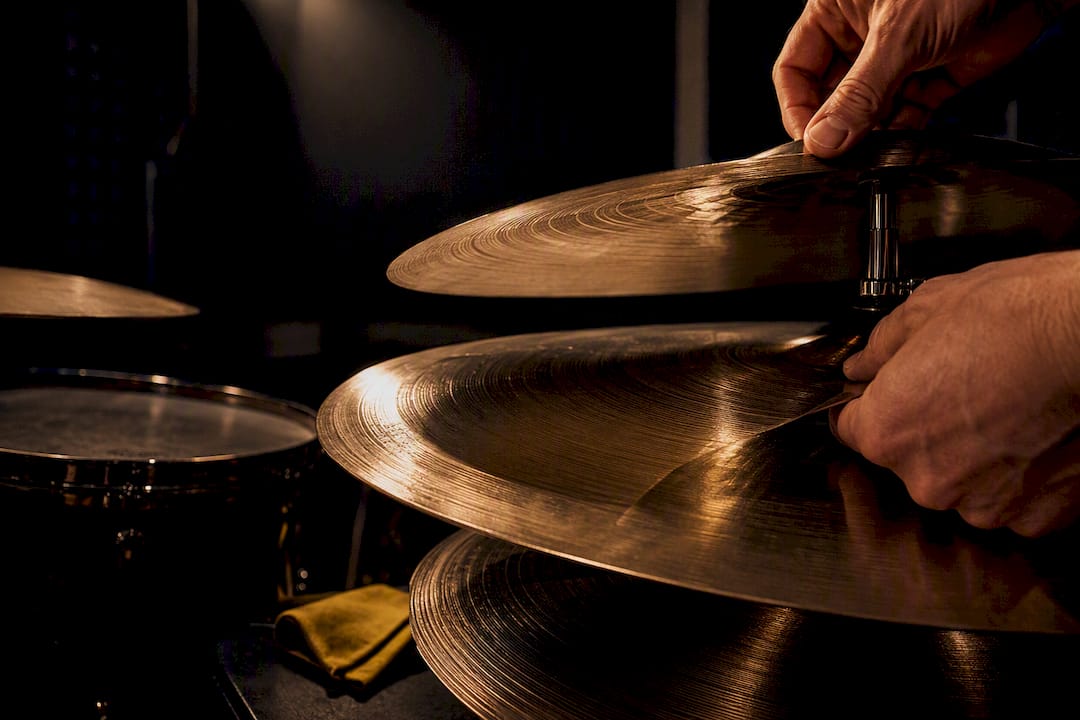
- Mount with correct felts and washers. A cymbal sitting directly on metal, or clamped too tight without the proper felt spacing, is one of the most common causes of cracking and keyholing around the bell.
- Store upright in cases with dividers, not stacked flat. Stacking cymbals directly against each other invites scratches and, over time, warping.
- Inspect regularly for hairline cracks, especially near the edge and around the bell, since small cracks spread fast once they start.
- Repair small edge cracks by trimming; replace a cymbal once a crack reaches the bow or the tone changes noticeably, since a cracked cymbal won’t recover its original voice.
Pro Tip: Loosen your cymbal stand wingnuts just enough that the cymbal can wobble slightly when tapped. A cymbal clamped too tight can’t vibrate properly, which chokes tone and dramatically increases crack risk at the edge of the bell.
Why Temple of Sound Is a Practical Resource for Cymbal Buyers
The curated packs on the site come from a direct manufacturer relationship rather than a reseller several steps removed from where the cymbals are made.
Beyond the product catalog, Templeofsound publishes ongoing educational content built specifically to help you make this decision without guesswork:
- Genre-matched pack guidance that goes deeper into which configuration fits your playing style.
- Maintenance and cleaning resources to help you protect a pack once you own it.
- Sizing breakdowns for individual cymbal types when you’re ready to expand beyond a starter pack.
- Membership tiers offering ongoing discounts for players who buy or upgrade regularly.
If you’re still unsure which pack fits your playing after reading through this guide, browsing sample packs directly or reaching out for personalized advice is a faster route than guessing from spec sheets alone. A short conversation about your genre, room, and budget usually narrows the decision down in minutes.
A Practical Take on Buying Your First Cymbal Pack
Buy the pack that grows with you, not the one that sounds most impressive in a demo video. A balanced starter set handles far more musical situations than beginners expect, and the upgrades you make later should come from specific frustrations with your current sound, not from marketing copy.
Test cymbals in person whenever you can. A recorded sample tells you something, but your ear against a real cymbal in a real room tells you everything. Treat every future upgrade as a deliberate answer to a problem you’ve actually run into, whether that’s not enough crash sustain or a ride that washes out too fast. Templeofsound’s pack guides are a solid next stop once you know what you’re listening for.
— Will
Ready to Build Your Cymbal Setup?
Templeofsound gives you direct access to Alchemist Collection cymbals without going through multiple layers of resellers, so you’re buying from the UK’s exclusive distributor rather than a generic marketplace listing.

Every pack on the site is organized so you can shop by genre and player level instead of scrolling through specs that mean nothing until you’ve read a guide like this one. Browse the full Alchemist Collection to compare starter and expansion packs side by side, and once you’ve settled on cymbals, check the London Drumstick Company lineup to match sticks to your new setup. Templeofsound also runs several membership tiers, including options with ongoing discounts for players who upgrade their kit regularly, alongside a Free Member tier for anyone just getting started. Head to the Templeofsound homepage to compare membership benefits and find the plan that fits how often you buy.
Sources
For deeper dives beyond this guide, Sweetwater’s Cymbal Buying Guide covers broader pack value comparisons, and Percussion Source’s listening guide breaks down testing technique in more detail. On the Templeofsound blog, the crash vs ride explainer and the cymbal care guide both build directly on what’s covered here.
- What to Listen for When Selecting Cymbals | Percussion Source
- Cymbals: Buyer’s Guides & Brand Rankings | DrumThat
- Drumming
FAQ
What Is the Best Cymbal Pack for Beginners?
A balanced starter pack with 14" hi-hats, a 16" crash, and a 20" ride covers the widest range of styles and is the most commonly recommended configuration for new drummers. It handles rock, pop, and general practice without forcing you into a specific genre before you know what you like playing.
How Should You Arrange Cymbals on a Drum Kit?
Hi-hats sit to your dominant hand’s left (or right for left-handed setups) within easy reach of your foot pedal, since you’ll play them constantly. The ride typically sits to your right at a height and angle that lets you reach the bell easily, while crashes are positioned within a quick arm swing on either side, angled slightly toward you to control decay.
Are Cymbal Packs Worth It?
Yes, for most beginners and intermediate players, cymbal packs offer better value than buying pieces individually because the set is voiced to sound cohesive together. Modern packs also span a wider quality range than they used to, so you’re not limited to bottom-tier alloys just because you bought a set instead of single cymbals.
What Cymbals Come in a Typical 5-Piece Setup?
A five-piece cymbal setup usually includes hi-hats, a ride, two crashes of different sizes, and either a splash or a china for accent variety. This expands on the core three-piece starter pack once a player has identified which additional sound is missing from their playing.
How Do I Know What Size Ride or Crash to Buy?
Genre and room volume are the biggest factors: rides typically run 20"-22" and crashes 14"-20", with smaller and thinner options suited to quiet, acoustic playing and larger, heavier options suited to loud rock or metal. When in doubt, the balanced starter sizes (16" crash, 20" ride) work as a safe middle ground you can adjust from later.