31 August 2026
Drummers: Tell Ping vs Wash on a Ride in Under a Minute
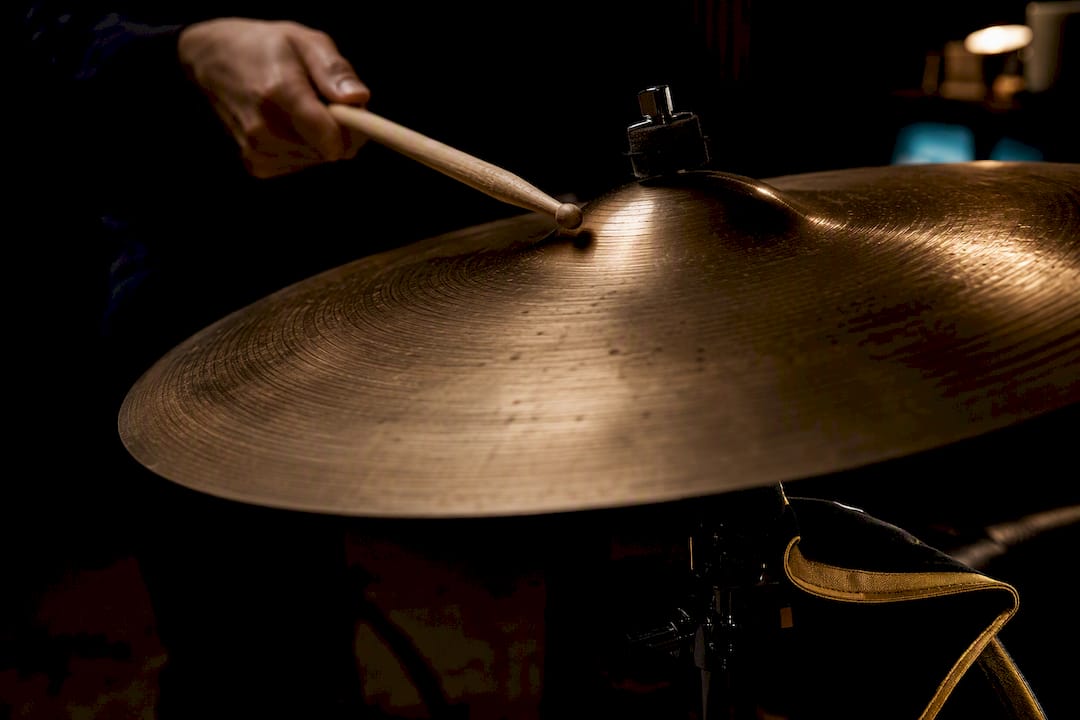
Drummers: Tell Ping vs Wash on a Ride in Under a Minute
Ping is the sharp, cutting stick sound you hear on each ride strike; wash is the shimmering overtone cloud that blooms and lingers underneath it. Every ride cymbal sits somewhere on that continuum. Want more ping? Play closer to the bell with a smaller tip. Want more wash? Move toward the edge and let the stick sit into the bow.
TL;DR:
- Larger, thinner rides with bigger bells and lighter lathing tend to produce wash, making them suitable for jazz and softer musical settings.
- Smaller, heavier rides with pronounced bells, tight hammering, and smooth finishes are more likely to be pingy, excelling in loud, projection-heavy genres.
- Technique allows drummers to emphasize ping or wash by striking near the bell for brightness or toward the edge for a softer, shimmering sound.
- When demoing a ride cymbal, focus on stick definition, wash decay, and crashability to assess its suitability for your playing situation.
- Many drummers keep both ping and wash cymbals on hand, choosing based on whether the environment demands projection or texture.
Table of Contents
- Ride Ping vs. Wash: What Makes a Cymbal Sound “Pingy”?
- What Does “Wash” Actually Sound Like on a Ride?
- Which Cymbal Specs Push a Ride Toward Ping or Wash?
- How Do You Play More Ping or Wash Without Changing Cymbals?
- What Should You Listen for When Demoing a Ride Cymbal?
- What Do Reviews and Player Consensus Say About Ping vs. Wash?
- When I’d Reach for Ping vs. Wash
- Try Before You Commit to a Ride
- Sources
Ride Ping vs. Wash: What Makes a Cymbal Sound “Pingy”?
A pingy ride gives you a sharp, dry attack that decays fast, almost like a woodblock crossed with a bell. You hear the stick before you hear the cymbal. That’s the point.
Spectral analysis of pingy rides shows why this happens. A review of the Zildjian A Custom Ping Ride documented concentrated energy peaks around 320 Hz, 440 Hz, 650 Hz, and 810 Hz, with a strong spike near 8.5 kHz. That combination gives you a bright fundamental with a crisp top end, and very little in between to muddy the attack.
What you’ll notice on a pingy ride:
- A short, defined “tick” on every stroke that separates cleanly from the note before it
- A prominent bell voice that rings almost like a separate instrument
- Minimal overtone buildup, even under a fast eighth-note pattern
That clarity is exactly why ping-heavy rides dominate rock and metal stages. Cut through a wall of distorted guitar and a loud kit, and a dry, high-partial attack survives where a washy cymbal disappears. The tradeoff: a pingy ride usually crashes poorly (stiffer, thinner bell notwithstanding) and can feel one-dimensional in a quieter, more textural setting. Grant Collins frames it plainly: ping rides are bright and built for projection, while darker, flatter cymbals trade that cut for articulation.
What Does “Wash” Actually Sound Like on a Ride?
Wash is the opposite instinct. Instead of a clean tick, you get a slower bloom of overtones that spreads out and lingers after the strike lands, filling the space between notes rather than punching through it.
The frequency spread on a washy ride is broader and less concentrated than on a pingy one. Instead of a few dominant peaks, you get a denser cluster of overtones across the mids and highs, which is what creates that shimmering, almost cloud-like texture. It’s less a sound event and more an atmosphere.
Where wash earns its keep:
- Jazz and acoustic settings, where the ride functions as a textural bed under the soloist rather than a rhythmic anchor
- Ambient or dynamic passages where sustain and blur are the goal, not precision
- Ballads and quieter sections where a hard attack would feel out of place
The risk is real, though. Push too much wash into a dense arrangement, and the rhythmic information gets buried. A drummer playing fast subdivisions on an overly washy ride can end up smearing the pattern into an indistinct roar, which is part of why flat rides exist as a middle path: dry and articulate, but without the brightness of a true ping cymbal, according to Grant Collins’s breakdown of the two voices.
Which Cymbal Specs Push a Ride Toward Ping or Wash?
You can predict a lot about a ride’s character before you ever hit it, just by reading the spec sheet. A few construction factors do most of the work.
- Diameter and weight. Larger, thinner rides generally wash more because there’s more surface to set overtones in motion and less mass resisting that motion. Smaller, heavier rides tend toward ping because the stiffer, denser body responds fast and decays quickly. Our breakdown of ride cymbal sizes covers how diameter changes projection and feel in more detail.
- Bell size and profile. A larger, more pronounced bell isolates a brighter, more percussive zone you can target directly, which reinforces ping. A small or flattened bell blends into the bow and softens that separation, favoring wash.
- Hammering and lathing. Dense, tight hammer patterns and heavier lathing remove metal and open up overtones, pushing a cymbal toward wash. Lighter hammering and unlathed or minimally lathed surfaces keep the cymbal stiffer and dryer, which supports ping. Manufacturing notes cited in cymbal reviews consistently tie hammering and lathing depth to this balance.
- Finish. Brilliant finishes tend to accentuate high-frequency brightness and definition; raw or dark finishes tend to soften attack and thicken the wash.
None of these are absolute laws. They’re directional tendencies you can use to shortlist candidates before you even pick up a stick.
How Do You Play More Ping or Wash Without Changing Cymbals?
Technique moves the needle more than most drummers give it credit for. The same ride can sound almost like two different cymbals depending on where and how you strike it.
- Pick your strike zone. Striking near the bell increases ping; moving toward the edge and playing into the bow increases wash. This single adjustment does more than any gear swap.
- Change your stick tip. Smaller, harder tips (nylon, small round wood) sharpen definition and favor ping. Larger, softer wood tips let more of the cymbal’s body speak, favoring wash.
- Adjust your angle and dynamics. A more glancing, lighter stroke lets overtones bloom; a more direct, harder stroke emphasizes the initial attack and shortens perceived decay.
- Practice switching mid-song. Play the verse near the edge for wash, then shift toward the bell for the chorus to add cut without touching another cymbal.
In a loud, amplified band, lean toward the bell and a smaller tip so you don’t vanish in the mix. In a quiet acoustic setting, the edge and a heavier tip give you more room to build texture.
Pro Tip: Try playing the exact same eighth-note ride pattern moving in slow increments from bell to edge to explore how creating and selling sound effect samples can capture this transition digitally. You’ll hear the ping-to-wash transition happen almost like a fader sweep, and that’s the control you’re actually buying when you pick a ride.
What Should You Listen for When Demoing a Ride Cymbal?
A good demo takes less than a minute if you know what to listen for in order.
- First, stick definition. Play a simple ride pattern and listen for how clearly each note separates. That’s your ping signal.
- Second, wash bloom. Let a note ring out and listen to how it spreads and decays. That’s your wash signal.
- Third, crashability. Give the edge a solid crash hit. A cymbal built for pure ping often chokes or sounds thin here.
Ask whether you’re hearing it mic’d or unmic’d, since a ride that sounds sufficiently bright in a quiet shop can vanish once it’s competing with a loud stage mix. If you play a wide range of material, consider carrying two rides rather than one compromise cymbal: a pingy option for loud sets and a washier one for quieter, textural songs. Our guide to choosing a cymbal pack walks through pairing strategies if you’re building out a full setup rather than shopping for a single ride.
What Do Reviews and Player Consensus Say About Ping vs. Wash?
Temple of Sound Ltd distributes handcrafted cymbals across the UK, and this breakdown draws on published spectral reviews and years of forum-documented player experience, compiled here by Will.
Reviewers measuring the Zildjian A Custom Ping Ride found concentrated energy in the higher mid and high partials with a fast decay, the acoustic signature that gives ping rides their dry, cutting character.
That evidence lines up with what drummers report across forums: players consistently favor ping for projection and wash for texture, and many keep multiple rides on hand rather than commit to one voice.
When I’d Reach for Ping vs. Wash
For a loud rock or metal gig, I want ping. No debate. Studio jazz or a quieter acoustic set pulls me toward wash every time, since the room does the projecting for you. Most working drummers land somewhere between, and the honest answer is to try both extremes on a few rides before deciding which side of that line fits your playing.
— Will
Try Before You Commit to a Ride
Reading spec sheets only gets you so far. Templeofsound gives you a straighter path to the actual cymbal, since as the UK’s exclusive distributor for Alchemist Cymbals, we can talk you through which models lean pingy and which lean washy before you ever swing a stick.

Members get ongoing loyalty rewards on top of that advice, which matters if you’re planning to carry two rides rather than one compromise cymbal. If you’re not sure where a particular model sits on the ping to wash scale, reach out and ask before you buy, or start browsing the current lineup at Temple of Sound to see which ride matches the checklist above.